

A hotel room or a campsite doesn’t have to mean instant coffee. A good portable espresso maker fits in a jacket pocket or a side pouch of a backpack and can pull a real shot with nothing but hot water and a squeeze of your hand — but the gap between the cheapest and priciest models is bigger than the size difference suggests.
Key Takeaways
- Manual, hand-pumped models are the lightest and cheapest way into real portable espresso, but they demand technique and a bit of arm effort per shot.
- Lever-style manual makers add a pressure gauge and a sturdier basket, which mostly means more consistent shots, not less effort.
- Battery-powered models remove the pumping entirely and self-heat the water, which is the one upgrade that changes daily use the most.
- A moka pot is not a portable espresso maker — it’s a different brewing method, even though it’s just as popular for travel.
- Pressurized baskets accept pre-ground supermarket coffee; unpressurized baskets need a fine, consistent grind and a decent grinder to taste right.
Best Portable Espresso Maker for Travel: The Short Answer
The short answer: buy a manual hand-pump model unless you make espresso every single day on the road, in which case a battery-powered model earns its extra bulk and cost by removing the arm work and the temperature guesswork. For everyone in between, a mid-tier lever model with a pressure gauge is the sweet spot — better consistency than the cheapest pumps, without paying for a battery and heating element you’ll charge more than you’ll use.
What You Get at Each Price Tier
Portable espresso makers split cleanly into three tiers, and each step up buys you less physical effort, not more flavor.
Entry-level hand-pump models are small, light — some under half a pound — and built around a side-mounted pump you squeeze by hand. Most ship with a pressurized basket, which forgives pre-ground, supermarket-bag coffee and produces a lighter, less concentrated shot than a cafe pull. This tier is the easiest to justify buying on a whim, since there’s nothing electronic to fail.
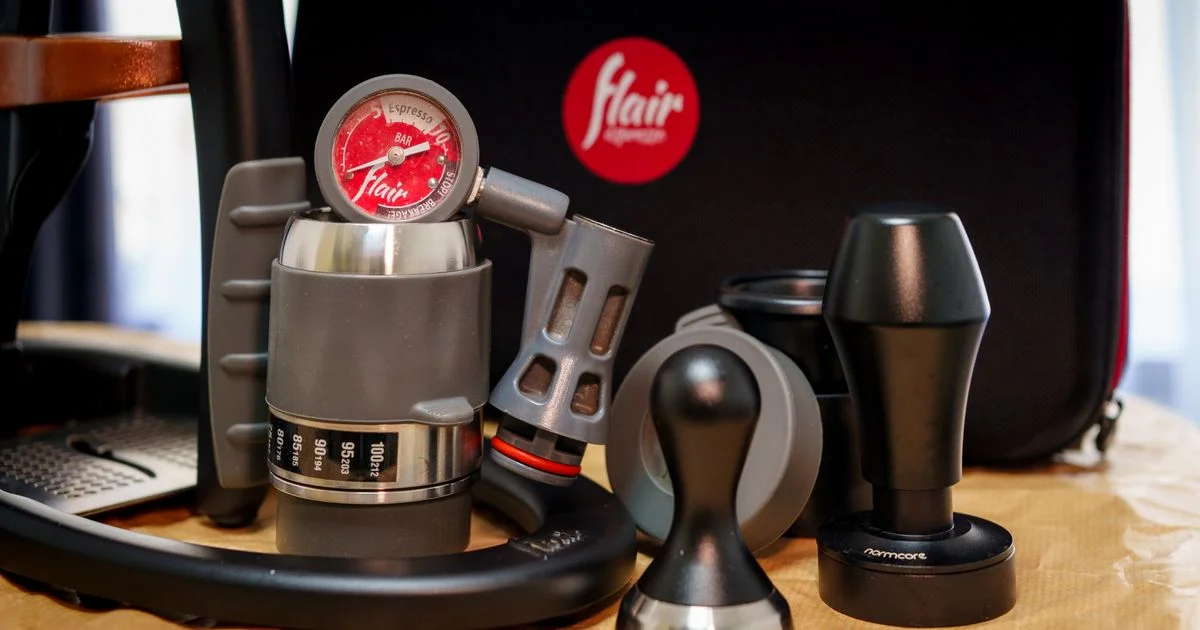
Mid-range lever models trade the squeeze-pump for a dual-lever or piston mechanism, which applies pressure more evenly across the whole shot. Most add a pressure gauge so you can actually see whether you’re pulling at the right bar range, plus a metal, non-pressurized basket that rewards a proper fine grind with a real, full-strength espresso rather than an approximation.
Premium battery-powered models add an internal pump and a self-heating element, so you’re not manually pressing anything and you’re not relying on separately-boiled water. Some run in a dual mode — manual pump-only for when the battery’s dead, or full electric for a hands-free shot in under three minutes.
| Tier | Best for | Where it falls short |
|---|---|---|
| Manual hand-pump | Occasional travelers, minimal pack weight | Pressurized basket caps flavor quality; arm fatigue on multiple shots |
| Manual lever (gauge) | Home baristas who travel and want a real shot on the road | Heavier, needs a proper grinder for best results |
| Battery-powered | Daily use, hotel rooms, anyone who wants zero technique | Charging is one more thing to manage; heavier and bulkier |

Moka Pot vs. Portable Espresso Maker: Not the Same Thing
Plenty of “portable espresso” roundups quietly slide a stovetop moka pot into the list, and it’s worth clearing up why that’s a different purchase. A moka pot brews under roughly 1–2 bars of steam pressure, well short of the 9 bars a real espresso shot needs — the result is a strong, concentrated coffee that tastes closer to espresso than drip coffee, but it isn’t espresso by the technical definition, and it needs an actual heat source (a stove or a camp burner) to work at all.
A true portable espresso maker generates real pressure through a hand pump, lever, or small electric pump, and only needs hot water you’ve already boiled or heated separately. If your trips already involve a camp stove, a moka pot is a perfectly good, cheap choice. If you want a shot in a hotel room with just an electric kettle, you need the hand-pump or battery category instead.
Manual vs. Battery-Powered: Features That Cost a Lot and Change Little
A manual espresso maker and a battery-powered one can produce a nearly identical cup in the hands of someone who already knows how to pull a shot. A few upgrades are worth naming honestly:
- Digital temperature displays. Useful for dialing in consistency, but most people eyeball “just off the boil” within a few degrees anyway.
- Dual pressurized/non-pressurized baskets included as standard. Nice for experimenting, but most people settle on one basket and never swap it.
- Branded travel cases and accessory kits. Genuinely useful for keeping small parts together in a bag, but a $5 pouch does the same job.
What actually changes daily use is the pump itself — hand effort versus none — and whether the device can heat its own water. Everything else is a matter of taste, not function.
Where a Cheap Hand-Pump Model Genuinely Falls Short
Buying the least expensive pump on the shelf does cost you in a few specific ways:
- A pressurized basket that produces a noticeably weaker, more watered-down shot than the picture on the box implies.
- Seals and gaskets that wear out faster, leading to pressure leaks after a few months of regular travel use.
- No dosing funnel or tamper included, which makes it easy to over- or under-pack the basket and get an inconsistent shot every time.
- A pump mechanism that requires real forearm strength to hit full pressure, which gets old fast on a multi-cup morning.
None of this means a budget hand-pump is a bad buy — it’s still the lightest, cheapest way to get real espresso pressure while traveling. It just means the first upgrade worth paying for is a proper basket and accessories, not a fancier case.
Cost Per Cup: Is Paying More Actually Worth It
Run the numbers on a per-cup basis and the value case for any tier holds up, since even the priciest portable makers pay for themselves against daily cafe espresso within a couple of months of regular use. The real question is whether the jump between tiers is worth it for you personally:
- If you travel a few times a year, the entry-level hand-pump tier is hard to beat — it pays for itself almost immediately and the pressurized basket is forgiving for occasional use.
- If you travel weekly or work remotely from hotels often, the time saved by a battery-powered model’s near-zero effort adds up fast, and that’s where the extra cost earns its keep.
- If you already own a grinder and care about shot quality over convenience, the mid-tier lever model with a real gauge and non-pressurized basket gives you the best cup for the weight.
Frequently Asked Questions
A few questions come up constantly when people buy their first portable espresso maker.
Do I need a separate grinder to travel with?
Only if you want a full-strength shot from a non-pressurized basket. A pressurized basket on entry-level models is specifically designed to work with pre-ground, supermarket-bag coffee.
Is a portable coffee press the same thing as a portable espresso maker?
No. A portable coffee press (a compact French press) steeps coffee rather than forcing pressurized water through a puck of grounds, so it makes a different style of coffee entirely — closer to a small pour-over than an espresso shot.
How much pressure do I actually need for a real espresso shot?
Around 9 bars is the industry standard for espresso extraction. Manual lever models with a gauge let you confirm you’re hitting that range; pressurized-basket pump models get close enough for most people’s taste without a gauge at all.
Can I use pre-ground coffee, or do I need fresh-ground?
Pressurized baskets work fine with pre-ground coffee. Non-pressurized baskets on mid-tier and premium models need a fresh, fine, consistent grind to avoid a sour or weak shot — that’s the trade-off for the stronger flavor.
Conclusion
The best portable espresso maker for most people is the cheapest hand-pump model that fits how often they actually travel — not the one with the most accessories in the box. Save the battery-powered upgrade for when you can genuinely feel the difference in your morning routine.


1 Comment
Comments are closed.