

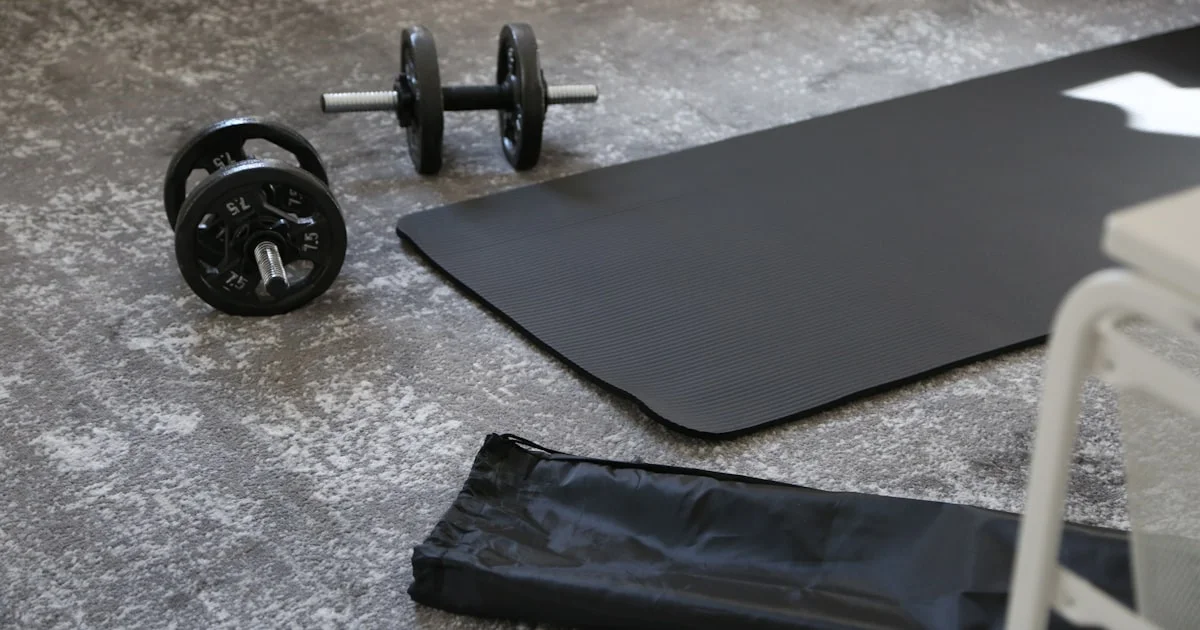
The best budget yoga mats for home workouts don’t have to cost a fortune or feel like a thin towel on a hard floor. A good low-cost mat can grip well, cushion your joints, and last through months of daily sessions if you know what to look for. This guide walks through the features that actually matter, so you can pick a mat that fits your workout and your wallet.
Key Takeaways
- Look for mats between 4mm and 6mm thick — enough cushion for your knees without making balance poses wobbly.
- A textured, closed-cell surface grips better than a smooth one, especially once you start to sweat.
- TPE (thermoplastic elastomer) mats usually offer the best mix of grip, cushioning, and price for home use.
- Extra-thick mats (8mm or more) feel plush but can throw off your balance during standing poses.
- A low-cost mat can hold up well if it has a textured top layer, a carrying strap, and solid reviews for durability.
Best Budget Yoga Mats for Home Workouts: The Short Answer
The short answer: the best budget yoga mats for home workouts are TPE or PVC mats in the 4mm to 6mm thickness range, with a textured non-slip top and a strap for rolling and carrying. That combination covers most home workout styles, from yoga flows to bodyweight circuits, without pushing you toward pricier premium mats.
Thicker isn’t always better. A mat that’s too plush can make standing balance poses harder because your foot sinks into the padding. A mat that’s too thin transmits every bump in a hardwood or tile floor straight to your knees and elbows. The sweet spot for most home workouts sits in the middle, and that’s also where most budget-friendly mats land.
Material matters too. TPE mats are lighter, grippier when dry, and generally considered more eco-friendly than PVC. PVC mats tend to be a bit heavier and more durable over years of use, but they can feel stiff out of the box. Both materials show up at budget price points, so the choice usually comes down to grip feel and how much you care about weight when rolling the mat up after a session.
Cheap Non-Slip Exercise Mats: What to Look For
A cheap non slip exercise mat is only worth buying if the grip actually holds up once you start moving. Slipping mid-plank or losing footing during a lunge is more than annoying — it’s how people tweak a wrist or knee. Grip is the one feature you shouldn’t compromise on, even on a tight budget.
Here’s what separates a mat that grips from one that slides around your living room floor:
- Surface texture: Look for a lightly textured or ribbed top layer instead of a smooth, glossy finish.
- Underside grip: A textured or rubberized bottom keeps the whole mat from creeping across hardwood or tile.
- Sweat resistance: Closed-cell foam surfaces resist moisture absorption, so grip doesn’t disappear halfway through a workout.
- Break-in period: Some budget mats need a few uses before the grip fully kicks in — a quick wipe-down before the first session can help.
If a mat’s product listing doesn’t mention texture or grip at all, treat that as a warning sign. The cheapest mats sometimes cut corners here first, since a flat, smooth surface is less expensive to manufacture than a textured one.

Affordable Thick Yoga Mats for Joint Support
If your knees, wrists, or lower back need extra cushioning, an affordable thick yoga mat can make home workouts a lot more comfortable. Thicker mats absorb more shock when you’re kneeling, doing floor work, or moving through a slower strength routine.
A few things to know before sizing up:
How Thick Is Too Thick?
Mats in the 6mm to 8mm range give noticeably more cushion than a standard 4mm mat, and they’re still stable enough for most standing poses. Once you go past 10mm, the mat starts to feel more like a gym cushion than a yoga mat — great for floor stretches and joint-heavy routines, but less ideal for anything that needs a firm base underfoot.
Density Matters as Much as Thickness
A thick but low-density foam mat can still feel unstable, because it compresses unevenly under pressure. Higher-density foam holds its shape better over time and won’t develop permanent knee dents after a few months of use. When comparing two mats of the same thickness, the denser one is usually the better long-term buy, even if it costs a few dollars more.
Best Value Workout Mats for Home: How the Options Compare
Once you weigh grip, thickness, and material together, a clearer picture of the best value workout mats for home starts to form. The table below compares common budget mat types side by side, based on how they typically perform rather than any specific price point, since prices shift often.
| Mat Type | Thickness / Cushioning | Grip | Best For | Trade-Offs |
|---|---|---|---|---|
| Standard TPE mat (4-6mm) | Moderate cushioning | Strong when dry, good textured feel | Yoga, bodyweight circuits, general home workouts | Less shock absorption for heavy floor work |
| PVC mat (4-6mm) | Moderate cushioning, denser feel | Good, tends to improve after break-in | Frequent daily use, longer-term durability | Heavier, less eco-friendly material |
| Thick foam mat (8mm+) | High cushioning | Varies — check for textured top layer | Joint-sensitive routines, floor stretching, Pilates | Less stable for standing balance poses |
| Travel/foldable mat (2-3mm) | Minimal cushioning | Moderate, depends on surface material | Small spaces, travel, layering over a thicker mat | Not enough padding for hard floors alone |
No single mat type wins across every category, which is why matching the mat to your actual workout style matters more than chasing the lowest price tag or the thickest option on the shelf.
How to Choose the Right Budget Mat for Your Workouts
With so many low-cost options available, narrowing the field comes down to a short checklist. Follow these steps in order to land on a mat that fits your space, your routine, and your budget.
- Decide what you’ll use it for most — yoga flows, strength training, stretching, or a mix of all three.
- Pick a thickness range based on that use: 4-6mm for general workouts, 6-8mm or more for joint-heavy routines.
- Check the listing or reviews for mentions of grip and texture, not just price.
- Consider the material — TPE for lighter weight and eco-friendly options, PVC for extra durability.
- Look for a mat that includes a carrying strap, since it makes storage and cleanup easier.
- Read a handful of recent reviews specifically about durability, since budget mats can vary batch to batch.
Going through this checklist takes a few minutes, but it prevents the common mistake of buying based on price alone and ending up with a mat that slides, flattens, or falls apart within a few months.
Caring for Your Mat So It Lasts
Even the best budget yoga mats for home workouts will wear out faster without basic care. A quick wipe-down with a damp cloth after sweaty sessions keeps the surface from breaking down early, and letting the mat air-dry fully before rolling it up helps prevent mildew or odor buildup. Avoid direct sunlight for long periods, since UV exposure can make foam and rubber surfaces brittle over time. Store the mat rolled loosely rather than folded, since sharp folds can create permanent creases that affect how flat it lies.
Frequently Asked Questions
A few questions come up often when people start shopping for an affordable mat. Here are straightforward answers to the most common ones.
What thickness is best for a budget yoga mat?
For most home workouts, 4mm to 6mm hits the right balance between cushioning and stability. Go thicker if you spend a lot of time kneeling or doing floor-based moves, and stay closer to 4mm if your routine includes a lot of standing balance work.
Are cheap yoga mats actually non-slip?
Many are, as long as the surface has some texture rather than a smooth, glossy finish. Grip also tends to improve slightly after the first few uses as the surface breaks in, so don’t judge a mat’s grip from a single session.
Is TPE or PVC better for a budget mat?
Neither is strictly better — they suit different priorities. TPE is lighter and considered more eco-friendly, while PVC tends to be more durable over years of heavy use. Both are common at budget price points.
How often should I replace a budget yoga mat?
Most budget mats last anywhere from six months to two years, depending on use frequency and care. Watch for flattened cushioning, a slick surface that’s lost its grip, or visible tears as signs it’s time for a new one.
Final Thoughts
Finding a mat that grips well, cushions your joints, and holds up over time doesn’t require a big budget. Focus on thickness, texture, and material rather than price alone, and a modestly priced mat can easily support months or years of consistent home workouts.


1 Comment
Comments are closed.