

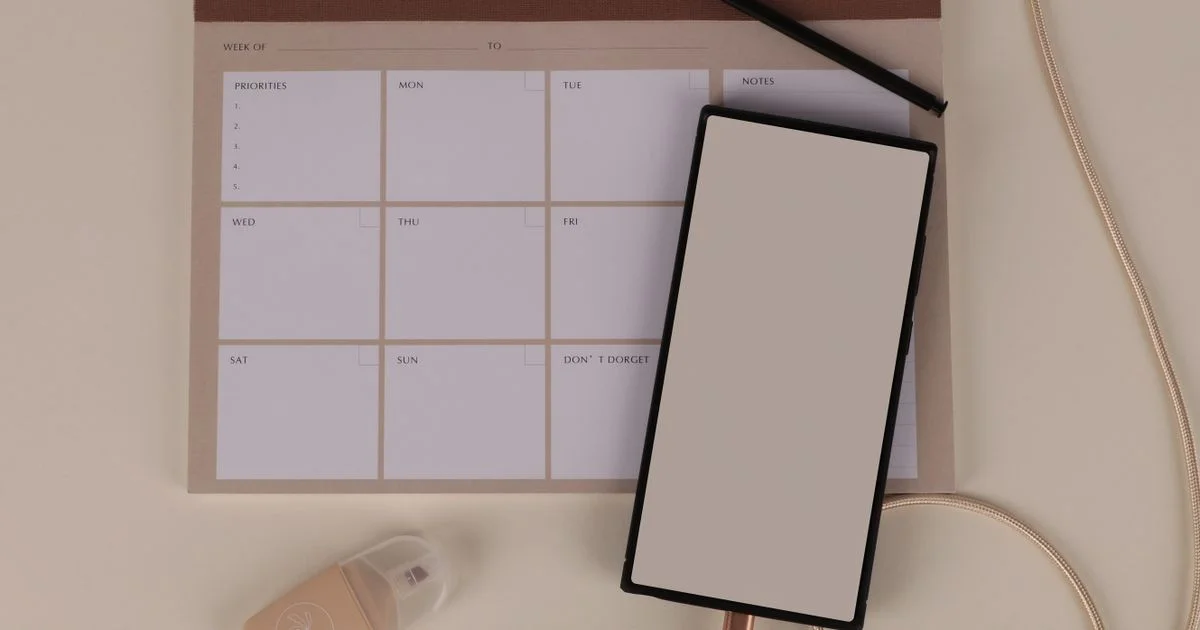
A planning app can send reminders, but it can’t give you the same sense of progress as physically crossing a task off a page. The best budget planners prove you don’t need a $40 designer notebook to stay organized — a well-laid-out $10–$15 planner does the same job for tracking goals, appointments, and daily to-dos. This guide walks through the layouts, features, and paper quality worth paying attention to before you buy.
Key Takeaways
- Layout matters more than price — a planner that matches how you actually think (daily, weekly, or monthly) gets used; one that doesn’t gets abandoned by February.
- Undated planners cost less per page over time and let you start any month, but dated ones build a habit loop by showing today’s date automatically.
- Paper weight (measured in GSM) determines whether pens bleed through, which matters more than the cover material for everyday use.
- A lay-flat or spiral binding makes a planner far more usable at a desk than a glued binding that won’t stay open.
- The cheapest planner in a lineup often skips an index or goal-tracking pages — check the inside layout, not just the cover, before buying.
Best Budget Planners: The Short Answer
The short answer: the best budget planners are the ones with a layout that matches your actual routine, printed on paper heavy enough to resist bleed-through, in a binding that lies flat on a desk. Beyond that, extra features like goal-tracking spreads or a built-in habit tracker are nice bonuses, not requirements. Spending more only pays off if you’re paying for a layout upgrade you’ll actually use, not just a nicer cover.
Types of Planners to Choose From
Before comparing specific features, it helps to narrow down which format actually fits how you plan your time.
Daily vs Weekly vs Monthly Layouts
Daily layouts give each day a full page, which suits people juggling many small tasks and appointments. Weekly layouts spread seven days across one or two pages, which works well for people who think in terms of a whole week at a time. Monthly-only planners are the lightest option, best for people who mainly need to track deadlines and events rather than day-to-day tasks.
Undated vs Dated Planners
A dated planner has the month and day pre-printed, which creates urgency and structure but means unused pages go to waste if you skip weeks. An undated planner lets you write in your own dates and start any time of year, which is the better choice if you tend to start planners in March and abandon the dated ones from January.
- Daily layout: best for detailed task lists and time-blocking
- Weekly layout: best for a balanced overview without daily clutter
- Monthly layout: best for deadlines and big-picture tracking only
Habit Trackers and Extra Spreads
Many budget planners now include a few bonus pages beyond the calendar itself — a habit tracker grid, a simple budgeting page, or a notes section at the back. These extras are worth a quick check before buying, since a planner with a habit tracker built in saves you from having to draw your own grid every month, but don’t pay a premium for a planner just because it lists more bonus pages than a cheaper option with the core layout you actually need.

Affordable Life Planner: What “Budget” Actually Buys You
An affordable life planner in the $10–$15 range typically includes a full year of dated or undated pages, a basic index, and simple weekly or daily spreads. What usually gets cut at this price is thicker paper, elastic closures, and pocket folders for loose papers — features that add convenience but don’t change whether the planner actually helps you stay on schedule. Spend the extra few dollars only on the features you know you’ll use daily, like a built-in bookmark ribbon if you flip between sections often.
Cheap Yearly Goal Tracker: Features Worth Paying For
If your main use case is a cheap yearly goal tracker rather than day-to-day scheduling, prioritize planners with dedicated quarterly or annual goal-review spreads over ones that just add a “goals” label to a blank page. A genuinely useful goal-tracking layout breaks a big goal into monthly checkpoints, which makes it far easier to notice you’re falling behind in June instead of realizing it in December.
Best Value Daily Agenda: Paper Quality and Binding
For a best value daily agenda, paper weight and binding matter more than most people expect. Paper under about 70 GSM tends to let ink bleed through, especially with gel pens or markers, which makes the back of every page unusable. A spiral or coil binding lets the planner lie completely flat on a desk, while a glued (perfect) binding is cheaper to produce but tends to spring shut, especially in the first and last few weeks of the book.
How to Pick the Right Planner for Your Habits
- Think back on the last planner or app you actually used consistently, and match its layout style rather than switching formats on a whim.
- Decide if you want dated pages for structure or undated pages for flexibility.
- Flip through an inside preview (most listings include one) and check the paper weight and binding type before buying.
- Look for a size that fits how you’ll carry it — a full desk-sized planner is different from one meant to fit in a bag.
- Confirm it includes the specific pages you need, like a goal tracker or an index, rather than assuming every planner has them.
Budget Planners at a Glance
| Planner type | Best for | Trade-offs |
|---|---|---|
| Daily dated planner | Detailed task tracking and time-blocking | Wasted pages if you skip days |
| Weekly undated planner | Flexible starts, balanced overview | Less room for detailed daily notes |
| Monthly-only planner | Deadline and event tracking | Not enough structure for daily task lists |
Frequently Asked Questions
A few practical questions come up again and again when comparing budget planners.
Are budget planners as durable as expensive ones?
Cover durability can vary, but the core factors that matter most day to day — paper weight and binding — are not strictly tied to price. Some budget planners use surprisingly heavy paper, so check the listing details rather than assuming price predicts quality.
Should I get a dated or undated planner?
Choose dated if you want built-in structure and plan to start at the beginning of the year. Choose undated if you tend to start planning systems mid-year or want to reuse the same planner format indefinitely.
What paper weight should I look for?
Aim for at least 70 to 80 GSM if you use gel pens or markers, since thinner paper is more prone to bleed-through and ghosting on the page behind it.
Is a spiral-bound planner better than a hardcover one?
For daily desk use, spiral or coil binding is generally more practical because it lies flat. Hardcover glued planners look nicer but can be harder to write in near the spine.
Do I need a planner if I already use a phone calendar?
A lot of people use both for different reasons. Phone calendars are better for reminders and shared scheduling, while a paper planner tends to help more with focused daily task lists and the kind of long-term goal tracking that’s easy to lose track of in an app.
Conclusion
The best budget planner is the one whose layout matches how you actually think about time, printed on paper that can handle your pen of choice. Skip the temptation to buy based on cover design alone, and check the inside pages before you commit.


