

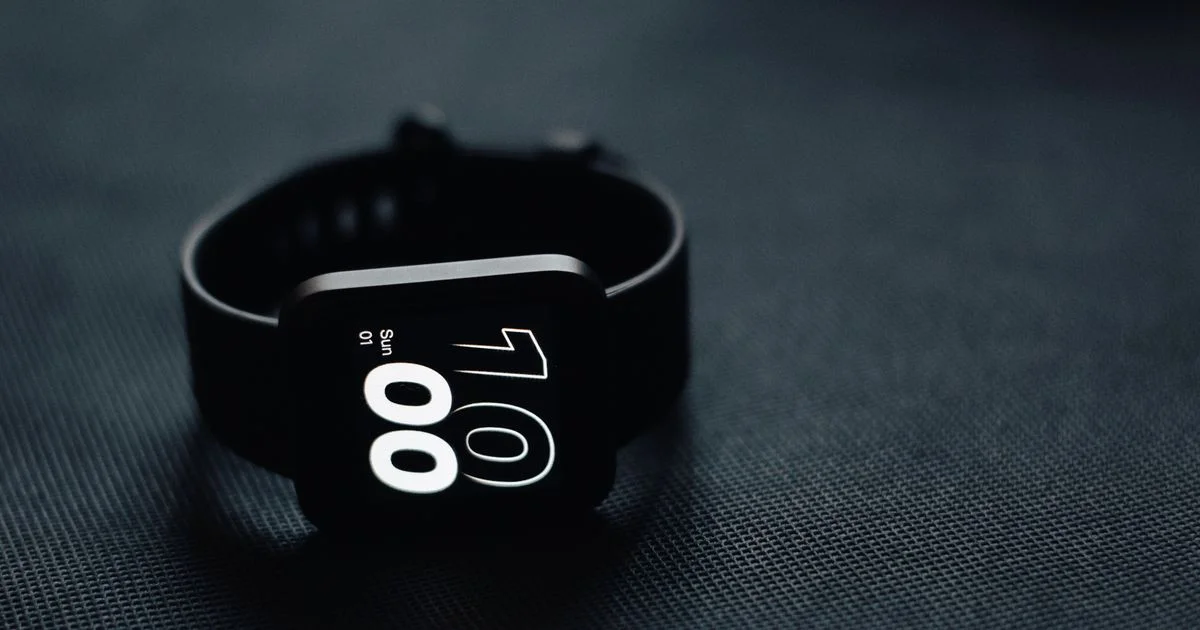
A wrist device sold almost entirely on health features is one of the few health-adjacent purchases your pre-tax medical account will refuse to pay for. That gap between how a cheap smartwatch under $200 is marketed and how it is treated by the rules that govern money is the whole value question here. What follows is what the low tier actually buys, what it keeps charging you for, and which of those costs the listing never shows.
A cheap smartwatch under $200 is priced by three parts
Strip the marketing out and a cheap smartwatch under $200 is a screen, a sensor stack and a radio, wrapped in a case. Almost all of the price difference inside the budget tier comes from those three items, in that order.
- The screen. The single most expensive component and the one you judge the watch by. An always-on panel costs more to buy and more to run, and it is the main reason two similar-looking watches differ in battery life.
- The sensor stack. An optical heart-rate sensor is now standard at every tier. A skin-temperature sensor, a blood-oxygen sensor or a built-in position receiver each add real cost, and the position receiver is the one that empties the battery fastest.
- The radio. Bluetooth alone is cheap. A cellular version is a different product with a monthly line attached to it, which is why it rarely appears at this price.
Case material, strap color and the number of advertised sport modes cost the maker close to nothing, so treat a long feature list as a design choice rather than as evidence of value.
You can check current options here:
Check on Amazon See on Walmart
Free versus paid tracking: is smartwatch worth it when the phone is free
The honest starting point for is smartwatch worth it is that the phone already in your pocket counts steps, logs walks and runs, and stores the history, at no additional cost. A watch is buying you three things the phone cannot: continuous heart-rate data, tracking during activities where you will not carry a phone, and a glanceable screen.
If none of those three describes your week, the free option is genuinely the better buy, and the honest recommendation is to spend nothing. If one or two of them do, the entry tier covers them. Paying more mainly buys screen quality and battery life, not a different set of measurements.
Watch for the companion app. Some makers put the training analysis, the sleep breakdown or the long-term history behind a monthly plan, so a watch bought at one price can quietly become a subscription. Check what the free tier of the app shows before you decide which watch is cheaper.
Why a pre-tax health account will not pay for it
This is the value fact that surprises buyers, and it is published in plain language. The Internal Revenue Service defines medical expenses as “the costs of diagnosis, cure, mitigation, treatment, or prevention of disease, and for the purpose of affecting any part or function of the body,” and then draws the line that matters: medical expenses “must be primarily to alleviate or prevent a physical or mental disability or illness” and “don’t include expenses that are merely beneficial to general health.”
The agency’s guidance applies that test to exactly the things a fitness watch is sold for. A gym membership qualifies only when it is bought “for the sole purpose of treating a specific disease diagnosed by a physician (such as obesity, hypertension, or heart disease).” General exercise for health improvement does not qualify, and the guidance says so even where a doctor recommended it, because it “is only for the improvement of general health.”
Read that as a price, because that is what it is. A general wellness purchase is made with money that has already been taxed. The practical consequences:
- Do not plan on an account balance covering the watch unless a physician has diagnosed a specific condition the device is treating.
- Do not treat a retailer’s eligibility badge as a ruling; the test is the purpose of the expense, not the shelf it sits on.
- Keep the documentation if a condition genuinely applies, because the burden of showing the purpose is yours.
- Otherwise, price the watch at its sticker value and compare it with free alternatives on that basis.

What a smartwatch price USA listing leaves out
Three recurring costs sit outside the number in a smartwatch price USA listing, and together they usually exceed the discount that made the watch attractive.
The first is the strap. It is the part that touches skin every day and the part that fails first, and a proprietary attachment turns a commodity purchase into a single-supplier one. A watch that takes standard spring bars can be re-strapped for a few dollars; a watch with a custom clip cannot.
The second is the charger. Almost every watch in this tier uses a proprietary magnetic puck rather than a standard cable, so losing it means buying a replacement from the maker, and a discontinued model can leave you without one at all.
The third is disposal, which is a real obligation rather than a footnote. The Environmental Protection Agency states that lithium-ion batteries and devices containing them “should NOT go in household garbage or recycling bins” and “should be taken to separate recycling or household hazardous waste collection points,” because damaged or crushed cells create a fire hazard in collection trucks and sorting facilities. The agency also notes that “not all batteries are removable or serviceable by the user.” Since a sealed cell in a watch is not something you replace, the watch and the battery expire together, and the last step of ownership is a trip to a collection point rather than a bin.
That third point is where the value calculation on the cheapest models turns. A device you keep for two years and then must specially dispose of has a higher real cost per year than its price implies.
How to read the best budget smartwatch deals 2026 listings
Discount season is the right time to buy in this category, and the best budget smartwatch deals 2026 season will mostly be clearing older model years rather than discounting current ones. That is usually fine, but it changes what to check.
Confirm the app still supports the model, because a watch is only as useful as the software behind it. Confirm the strap size is a standard width. Confirm the charger is still sold separately. And compare the discounted price against the current model’s ordinary price, not against a list price you cannot verify.
| Tier | Screen | What it measures | What it costs you later |
|---|---|---|---|
| Entry band | Small, off unless raised | Steps, sleep, heart rate | Sealed battery; strap often proprietary |
| Budget watch | Larger, sometimes always-on | Adds position tracking and blood oxygen | Proprietary charger; app tiers appear |
| Upper budget | Bright, always-on | Same measurements, better sampling | Shorter battery life from the screen, not the sensors |
| Above this tier | Premium panel, metal case | Largely the same measurements | Repair costs scale with the case, not the electronics |
Where the money is genuinely wasted
Three upgrades in the budget tier reliably cost money and change very little.
The first is paying for a longer list of sport modes. A sport mode is a label applied to the same sensor data, and nobody uses forty of them.
The second is paying for an always-on display and then turning it off to save the battery, which is the most common outcome. If you want the battery life, buy the watch without the panel that spends it.
The third is paying extra for a metal case at this tier. It adds weight and repair cost while protecting electronics that will be obsolete before the case is scratched.
Money that is well spent: a standard strap width, a screen you can read outdoors, and an app whose free tier shows the numbers you care about. The same trade-off shows up one category over, where the price of an invisible health tracker is decided by what is rented rather than what is bought.
Frequently Asked Questions
These four come up whenever the pre-tax and running-cost points are new to a buyer.
Can a doctor’s note make a fitness watch an eligible medical expense?
The published test turns on whether the expense is primarily to treat a specific diagnosed disease rather than to improve general health. A recommendation on its own does not convert a general wellness purchase, which the guidance states directly about exercise.
Does a more expensive watch measure heart rate more accurately?
Within this tier the sensor hardware is broadly similar, and the bigger variables are fit and how tightly the strap sits. Spend on a band that stays put before spending on a higher model number.
How long will a budget watch keep working?
The limit is usually the sealed battery and the app support, not the case. Plan on the useful life being measured in years rather than decades, and factor the disposal step in from the start.
Is a fitness band a better buy than a watch at this price?
If you want the measurements rather than the screen, a band costs less, lasts longer between charges and does the same counting. The watch format is worth paying for when you actually read the screen during the day.
Bottom line
Inside this tier the screen sets the price and the strap, charger and sealed battery set the real cost of ownership. Treat the health framing as marketing rather than as a category the tax rules recognize, check what the free app tier shows before you compare models, and buy the simplest watch whose screen you will genuinely use.


2 Comments
Comments are closed.