

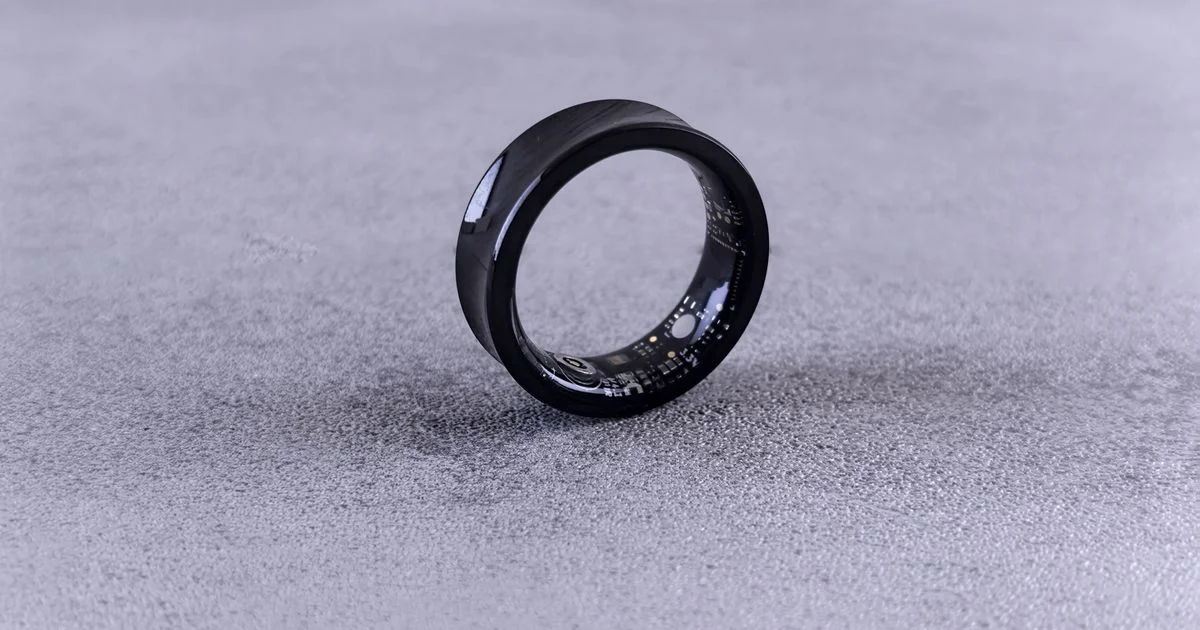
You can own a screenless tracker outright and still not own what it tells you. The invisible health tracker price printed on a product page covers a ring or a band; the analysis that makes it useful usually arrives as a monthly bill that never appears in the comparison. This is where the money in this category really sits, and which half of it you can stop paying.
This is an independent editorial comparison. We are not affiliated with Oura or WHOOP, and no brand reviewed or approved this article.
Scope note: this article is about cost, not medical advice. Its sources are the Federal Trade Commission and the manufacturers’ own published membership and support pages. A wearable score is not a diagnosis. Chest pain, an irregular resting pulse, breathlessness or sleep that has been bad for weeks belong with a clinician rather than with a better tracker.
What an invisible health tracker price buys, and what it only rents
Two business models sit behind the same shelf. In the first, you buy the hardware and then subscribe to the software that interprets it. In the second, the subscription is the product and the hardware arrives as part of it.
Oura’s own support documentation shows the first model with unusual clarity. Without an active membership, the app gives you “your three daily Oura scores (Readiness, Activity, and Sleep), ring battery, basic profile information, app settings, and the Explore content” — and nothing else. The detailed sleep staging, the 24/7 heart rate, the temperature trends, the periodic reports and access to the Oura API all sit behind the membership. The ring you paid for keeps sensing; the interpretation stops.
WHOOP runs the second model openly. Its membership page states that “each WHOOP membership includes our most advanced wearable technology, 24/7 health insights, and personalized coaching to help you build lasting habits,” and the company publishes three annual membership tiers rather than a hardware price. You are not buying a band with a subscription attached; you are buying a subscription that ships a band.
Both arrangements are stated openly. They just mean the number to compare is not the one on the product page: work out the first-year total and the fifth-year total for each, and the ranking usually changes between the two.
The free tier is already on your wrist or in your pocket
Before pricing anything, check what you are replacing. A phone counts steps for nothing, and a basic watch you already own records resting heart rate and a workout. What neither gives you is a nightly readiness figure, and for a lot of buyers that figure changes no decision they were not already going to make.
The honest case for paying is narrower than the marketing and still real. If you are training seriously, recovering under a clinician’s eye, or genuinely cannot tell good nights from bad ones by feel, a continuous overnight record earns its keep.
If a screen is not a dealbreaker, our look at what changed between smartwatch generations is worth a read first, because a watch you already own may cover most of this without any membership at all.
Where a cheap invisible health tracker stops being cheap
A cheap invisible health tracker advertised at an attractive hardware figure is usually the subscription model in disguise, and the tell is easy to spot: look for the words “membership,” “premium” or “plus” anywhere on the product page and then find out what the app shows without it.
Ask these four questions before the card comes out:
- What exactly does the app display with no active membership?
- Is the membership billed monthly or annually, and what happens at renewal?
- Can you export your own history, and in what format?
- If the company stops selling this device, does the app keep working?
Oura answers the third question better than most of its category. Its support pages state that “if you cancel your membership, and do not delete your account, all of your Oura data and account information will remain securely saved,” that access continues through the current billing period, and that members can export their data in CSV format from the Membership Hub. That export is the single most valuable feature nobody advertises, because it is the one that makes leaving possible.

Sizing, batteries and what a budget invisible health tracker gives up
The hardware compromises in a budget invisible health tracker are physical rather than digital, and they are the ones a spec sheet hides well.
Fit comes first. A ring that is half a size wrong reads badly at night and is uncomfortable enough that it ends up in a drawer, which is a total loss rather than a partial one. Any seller offering a sizing kit before shipping is doing you a favor, and a seller who does not is transferring the risk to you.
Battery is the harder limit. These devices are sealed, so the cell inside is not replaceable in the way a watch strap is. Whatever the device costs, divide it by the number of years the battery will hold a useful charge rather than by the warranty length — that is the real cost per year of ownership, and it is the figure that makes a mid-range device with a longer service life cheaper than an entry one.
Charging design matters more than it sounds. A proprietary dock that only works with one model is a small hostage situation; lose it on a trip and the device is jewelry until you get home.
What makes an affordable invisible health tracker still worth wearing next year
An affordable invisible health tracker is one whose running cost you can predict and whose data you can take with you. There is a third factor that almost nobody prices, and it is a regulatory one.
The Federal Trade Commission puts it bluntly on its own business guidance: “HIPAA — HHS’ Health Insurance Portability and Accountability Act — addresses privacy and security for most doctors’ offices, hospitals, and insurance companies. But with advances in monitoring and technology, a lot of health-related information doesn’t fall within HIPAA.” The medical-privacy law that people assume covers their sleep data very often does not.
What does apply is the FTC’s Health Breach Notification Rule, which “applies to health apps and similar technologies not covered by HIPAA.” The rule treats a person’s use of a health-related app, along with diagnoses, lab results, medications and treatment information, as identifiable health information. It defines a breach of security to include “an unauthorized acquisition of unsecured PHR identifiable health information in a personal health record that occurs as a result of a data breach or an unauthorized disclosure” — note that an unauthorized disclosure counts, not only a hack. Where 500 or more people are affected, the company must notify the FTC “without unreasonable delay” and “in no case later than 60 calendar days after the discovery of a breach.”
Read that as pricing information rather than as alarm. You are buying a subscription from a company that is not your doctor, under a rule that requires it to tell you when something goes wrong rather than to prevent it — a reason to prefer a vendor with a clear export path and a plainly written policy.
| What you are paying for | Hardware-only tier | Hardware plus membership | Membership-includes-hardware |
|---|---|---|---|
| Up-front outlay | Lowest | Highest | Low or none |
| Recurring cost | None | Monthly or annual | Monthly or annual |
| What you see if you stop paying | Everything it ever showed | A small subset of scores | Typically nothing |
| Depth of overnight analysis | Basic | Detailed while subscribed | Detailed while subscribed |
| Hardware upgrades | You buy them | You buy them | Often folded into the plan |
| Ease of leaving | Nothing to cancel | Good if data export exists | Device usually stops being useful |
Where the money is genuinely wasted
The clearest waste is a membership running on a device that has been in a drawer for two months. These plans renew quietly and the hardware gives no sign that nobody is wearing it. Put the renewal date in a calendar the day you buy, and treat a missed month as a decision rather than an accident.
The second is paying for a higher tier to unlock scores you will not act on. More metrics do not produce better sleep; a consistent bedtime does. If the top tier’s headline feature is another composite number, the middle tier is doing the same job.
Third, buying a second device in the same category. A ring and a band measure overlapping things and produce two sets of numbers that disagree, which is a recipe for trusting neither.
Where buying cheap genuinely costs you is fit and export. A tracker that does not fit is worn less and measures worse, and a platform with no way to download your own history means every year of data you accumulate makes leaving more expensive.
Five steps, in this order:
- Decide what decision you want the data to change. If there isn’t one, stop here.
- Check what the free app shows with no membership, on the exact model you are considering.
- Add twelve months of membership to the hardware figure, then add sixty months, and compare those totals rather than the shelf prices.
- Confirm the device ships with a sizing kit or a free exchange.
- Confirm you can export your own history before you have any history worth keeping.
Frequently Asked Questions
Three questions decide most of the value in this category, and one of them is about leaving.
What happens to my data if I cancel?
It depends on the vendor, so check before you buy. Oura’s published answer is that canceling without deleting your account leaves your data and account information saved, with access continuing through the current billing period and a CSV export available. Treat a vendor that will not answer this question plainly as a more expensive vendor.
Is the hardware useless without a subscription?
Rarely useless, usually reduced. In Oura’s case the app still shows three daily scores, the ring’s battery level and basic profile settings with no active membership. On a plan where the membership includes the hardware, stopping the plan generally stops the device being useful at all.
Is my sleep data protected like medical records?
Generally not. The FTC states that a great deal of health-related information does not fall within HIPAA, and covers these products instead under its Health Breach Notification Rule, which requires notification after a breach rather than the protections people associate with a doctor’s office.
Can I switch tiers if I pick the wrong one?
Usually upward immediately and downward later. WHOOP’s own membership page says you “can upgrade your membership at any time” but that a scheduled downgrade “will only take effect at the end of your current billing cycle.” Start on the lower tier for that reason.
Bottom line
Price the membership, not the device, and add up five years of it before you compare anything. Pay for a good fit and a real export path; treat every extra score above that as something you should be able to name a decision for.


5 Comments
Comments are closed.