

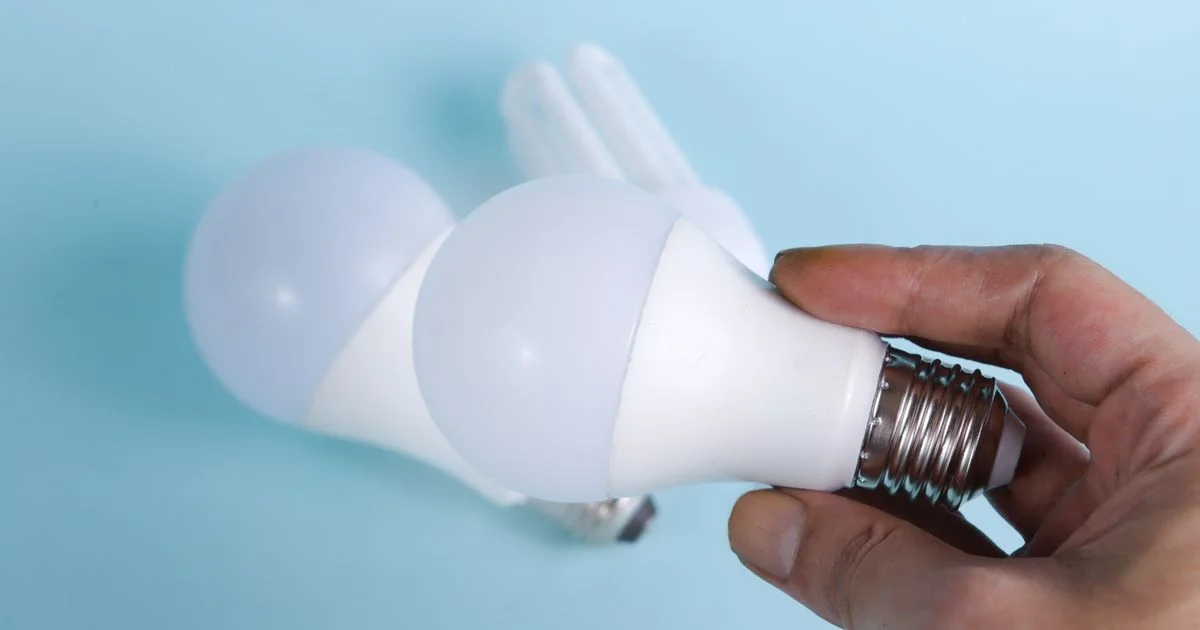
Federal rules decide what a light bulb box has to tell you, and those rules stop at the screw base. That is why sunrise alarm clock deals 2026 are so hard to judge: the discount sits on a sealed box whose brightness, running cost and rated life are nowhere printed. This guide prices the parts you are actually buying.
This is a consumer-cost guide. A wake-up light is a household lamp with a clock in it, not a medical device, and nothing here is medical advice. If your sleep or your mood in the darker months is a health concern, that is a conversation for a clinician rather than a shopping decision.
What sunrise alarm clock deals 2026 are actually discounting
A wake-up light is sold as one object and billed as three. The first part is an LED panel plus the small power supply that drives it. The second is a clock: a display, a timekeeping chip, usually a speaker and often an FM radio. The third is the software layer, which means an app, a wireless radio to reach it, and a company keeping that app alive.
A seasonal discount comes off the bundle, and the three parts do not age at the same rate. The light is the cheapest component in the box and the one buyers think they are paying for. The clock electronics decide whether the unit is still usable in year five. The app can be switched off by a decision you have no say in.
You can check current options here:
Check on Amazon See on Walmart
The five numbers a bulb box must print, and this box does not
Buy an ordinary screw-in bulb and the package carries a Lighting Facts panel. The Federal Trade Commission sets out its contents in the Energy Labeling Rule. Under 16 CFR 305.23(b)(3) the panel must give the light output as “Brightness” in “average initial lumens rounded to the nearest five”; the “estimated annual energy cost of each lamp included in the package based on the average initial wattage, a usage rate of 3 hours per day and 11 cents ($0.11) per kWh”; “The life, as defined in this part, of each lamp included in the package, expressed in years”; the color temperature in degrees Kelvin as “Light Appearance”; and the wattage in “average initial wattage”.
Five comparable numbers, on a package that often costs less than a sandwich. Now look at where that duty attaches. The FTC guidance for manufacturers describes the covered products as “most general service ‘lamps’ with medium screw bases, including most incandescent, compact fluorescent (CFL) and light-emitting diode (LED) light bulbs”, plus specialty consumer lamps with “medium screw, candelabra screw, GU-10, or GU-24 bases”.
A wake-up light has no screw base. Its LEDs are soldered to a board inside a sealed housing, so it is not a lamp in the sense the rule uses, and nothing obliges its box to print any of those five figures. Some makers publish a lumen figure anyway, many publish a vaguer claim, and a few publish nothing. Two of these devices on one shelf cannot be compared on brightness, efficiency or rated life from their packaging. Two bulbs always can.
What the box will usually leave out:
- Brightness in lumens at the setting you would wake up to, rather than at maximum
- Any rated life for the light source or for the electronics driving it
- Energy use, including the standby draw of a clock that never switches off
- Whether the light source can be replaced at all
- How long the app and the firmware will be supported
Where a cheap sunrise alarm clock stops being cheap
The honest case against the budget tier is not that a cheap sunrise alarm clock gives a worse fade. It is that the whole device is disposable in a way a bulb is not, and the part that kills it is rarely the part being advertised.
The Department of Energy solid-state lighting guidance is blunt about this. “The rated lifetime of a complete system cannot be longer than the in-situ lifetime for any of its components,” it says, and it names the usual culprit directly: “the driver is the weak link for some currently available LED products.” The LEDs in a wake-up light will very likely outlast the small power supply behind them, and in a sealed unit you cannot change either one.
The second trap is what a lifetime figure means. Lighting lifetimes are quoted against lumen maintenance, “most often the point when output has dropped to 70% of the original value, denoted L70”, and those ratings are “usually established based on the time at which 50% of a sample of products are expected to reach L70”. A unit faded to seventy percent of its original output has not failed by that definition, but on a device bought to be bright enough to wake you it has lost most of the reason you bought it. The same guidance adds that “Lifetime specifications can only describe the behavior of a population; any single product may fail before or after the rated lifetime.”
What the sunrise alarm clock price actually buys at each tier
Tiers are easier to reason about than models, because the sunrise alarm clock price ladder is fairly consistent in what it adds at each step. Entry units give you a fade, a fixed ramp, a buzzer and a dim display. Mid-range units add a choice of wake sounds, an FM radio, a proper dimmer for night use and sometimes an app. Premium units add scheduled routines, several light colors, a better speaker, and occasionally a battery that keeps the alarm alive through an outage.
| What you are paying for | Entry tier | Mid tier | Premium tier |
|---|---|---|---|
| Light that fades up | Yes, fixed behavior | Yes, adjustable | Yes, adjustable |
| Display dim enough for a dark bedroom | Often the weak point | Usually fine | Usually fine |
| Sound options | One buzzer | Several, plus radio | Several, plus a real speaker |
| App control and schedules | None | Sometimes | Yes, and it is the main upsell |
| Keeps the alarm through a power cut | Rarely | Sometimes | Sometimes |
| Light source you can replace yourself | No | No | Almost never |
| Printed, comparable brightness figure | Not required | Not required | Not required |
Read the last two rows together. At every tier you buy a sealed light source with no duty to state its brightness, which is an odd thing to pay a premium for.

Free versus paid: the bulb already in your ceiling
If there is a smart bulb anywhere in the bedroom, part of this purchase is already sitting in the house. Most smart bulb apps will fade a bulb up on a schedule, and running that schedule costs nothing beyond the bulb you already bought. The bulb wins on paperwork and on repair: it is a screw-base lamp, so its package carries the Lighting Facts panel described above and you can compare it on five printed numbers, and when it dies you replace a bulb rather than a clock.
The bulb loses on placement and on sound. A ceiling fitting is not beside your head, so the light arrives from the wrong direction and distance. The schedule leans on your home network. A bulb makes no noise, so it is a fade with no fallback, and it has no display, which some readers count as a feature and others as the point of a bedside clock.
How to price the decision honestly, in order:
- Count the smart bulbs already in the room and check that their app supports a scheduled fade. If it does, that is your free baseline.
- Decide if you need a sound at the end of the fade. If you do, a bulb alone will not do it and a plain bedside clock might close the gap.
- Look for a published brightness figure on any unit you are considering, in lumens, at a stated setting. Treat its absence as a reason to pay less, not more.
- Ask what happens when the light stops working. If the answer is a new unit, price it as a consumable rather than as furniture.
- Price the app features separately. If the only gap between two tiers is scheduling you would set once, the cheaper tier is the better buy.
Who gets a yes on is sunrise alarm clock worth it
The question is sunrise alarm clock worth it has two honest answers, and they turn on the room and on what you already own. Someone in a basement bedroom or a north-facing room in winter, with no smart lighting and a habit of sleeping through a phone alarm, is buying something a bulb will not give them for free. Someone with a bright east-facing window and a shelf of connected bulbs is paying a premium for a schedule they can already run.
It is also worth separating this device from a light therapy lamp, which is a different product bought for a different reason at a different output. If that is what you are shopping for, read our guide on whether a light therapy lamp is worth it rather than treating a bedside wake-up light as a cheaper version of one.
Where the money is genuinely wasted
Color-changing light is the clearest waste. A wake-up routine uses warm light climbing to white, and the other sixteen million options are a feature you demonstrate once. Built-in speakers are the second: a wake-up light is a worse speaker than the phone charging next to it, and audio quality in an alarm is a specification you use for four seconds a day.
App-only scheduling is the third and the worst value, because a schedule you set once is not worth a cloud account, a firmware update path and a dependency on a company staying interested. The fourth is any unit priced on vague wellness language: a device that cannot state its brightness in lumens is in no position to claim what that brightness does.
Frequently Asked Questions
These come up once the cost picture is clear, and the answers turn on paperwork rather than specifications.
Why do not these devices print a brightness figure?
Because nothing requires them to. The Lighting Facts panel is tied to lamps with screw and specialty bases, and a sealed unit with soldered LEDs falls outside it. Treat a published lumen figure as a point in a unit favor and an absent one as a reason to pay less.
Can the light inside be replaced when it fails?
On almost every model, no. The LEDs and their driver sit inside the housing, which is why the Department of Energy point about a system being limited by its shortest-lived component matters. Plan on replacing the whole device.
Does a smart bulb do the same job?
For the light itself, largely yes, if its app supports a scheduled fade. It makes no sound, it is usually in the ceiling rather than at your bedside, and it leans on your network. Against that, it is already paid for and its box carries five comparable numbers.
Is a seasonal discount a good time to buy one?
It is a good time to buy the tier you had already chosen, and a poor time to move up one. The features separating tiers are app features and speakers rather than better light, and a discount does not change that.
Bottom line
This is a category where the cheap alternative comes with better paperwork than the expensive product. A screw-in bulb has to print its brightness, its yearly running cost and its rated life; a sealed bedside unit has to print none of them. Buy the lowest tier that gives you the fade and the sound you need, treat it as a consumable rather than a fixture, and check what is already in the ceiling first.


