

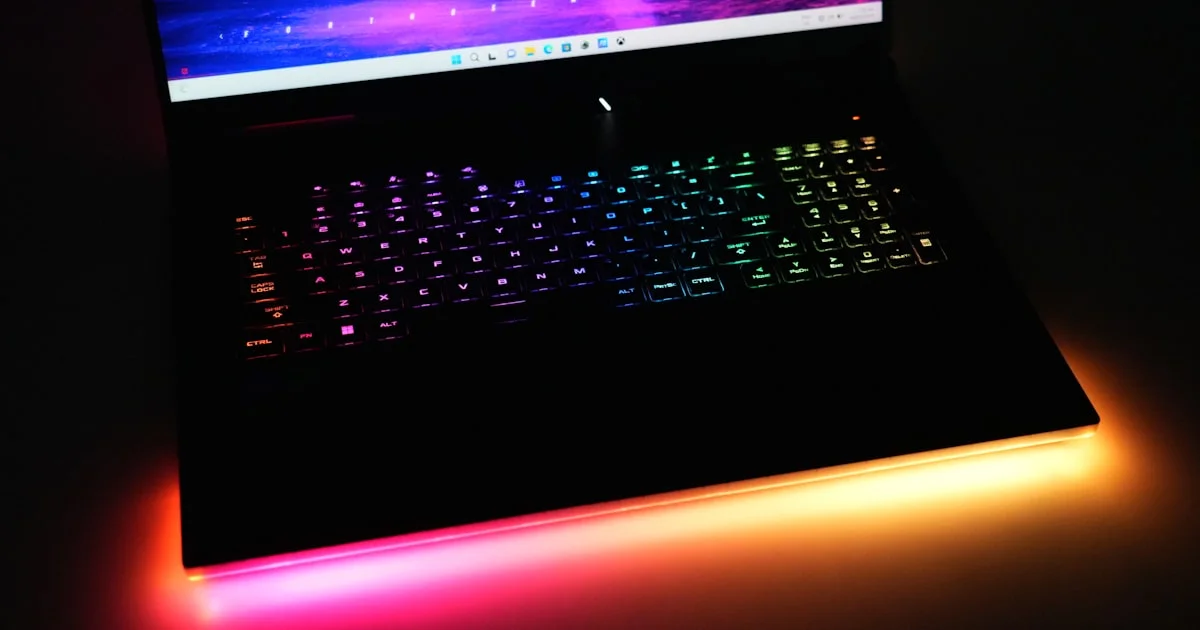
Shopping for the best gaming laptop 2026 has to offer can feel like a full-time job, with new GPUs, bright screens, and shifting prices all competing for your attention. The right laptop for you depends on your budget, the games you play, and how often you carry it around. This guide breaks down what actually matters this year, so you can pick a machine that fits your life, not just your wish list.
Key Takeaways
- A current-generation NVIDIA GPU and at least 16GB of RAM matter more than brand name for smooth 1080p and 1440p gaming.
- A solid gaming laptop under $1,000 can handle esports titles and older AAA games well, but expect trade-offs in screen quality and battery life.
- A thin, portable gaming laptop under five pounds with a 14- to 15-inch screen is the sweet spot for gaming on the go without losing too much power.
- The best gaming laptop deals tend to show up around major shopping holidays and when new GPU generations launch and push older stock down in price.
- Cooling and display quality matter as much as raw specs — a laptop that throttles under load feels slower than its spec sheet promises.
What Is the Best Gaming Laptop 2026 Has to Offer?
The short answer: the best gaming laptop 2026 shoppers can buy pairs a current-generation GPU with a fast processor, a high-refresh display, and cooling that can actually keep up during long sessions. There is no single “best” model for everyone — a competitive esports player and a single-player RPG fan want different things from the same budget. What stays true across the board is that balance beats raw numbers on a spec sheet.
GPU and CPU: What to Look For
Most gaming laptops released this year use NVIDIA’s RTX 50-series graphics cards, paired with either Intel Core Ultra or AMD Ryzen AI processors. Both CPU families now build AI acceleration and stronger efficiency cores into the chip, which helps battery life almost as much as it helps gameplay. For most players, the GPU tier matters more than the exact CPU model — it is the single biggest factor in frame rates and ray-tracing performance.
A few features are worth checking before you buy:
- At least 16GB of RAM, with 32GB recommended if you also stream or run creative apps
- A 1TB NVMe SSD, since modern game installs eat storage fast
- A 1080p or 1440p display with a refresh rate of 144Hz or higher
- A cooling system with vapor chambers or multiple fans for sustained performance
Display, Cooling, and Battery Life
A great GPU is wasted on a dim, washed-out screen. Look for a panel with strong color accuracy and at least 300 nits of brightness so games look right even in a bright room. Cooling matters just as much: a laptop that throttles under load runs slower than a cheaper model that manages heat better. Battery life on gaming laptops is still modest compared to everyday laptops, so treat “long battery life” claims as best-case numbers, not everyday reality.
Here’s how the main categories compare:
| Laptop Type | Best For | Trade-Offs |
|---|---|---|
| Budget (around $1,000 and under) | Esports titles and older AAA games at 1080p | Weaker GPU headroom, dimmer screen, average battery life |
| Mid-Range | Most current AAA games at high settings, 1080p or 1440p | Heavier build, moderate fan noise under load |
| High-End / Premium | 4K gaming, streaming, and future-proofing | Highest price, shorter battery life, bulkier chassis |
| Portable / Thin-and-Light | Gaming on the go and mixed work-and-play use | Some GPU performance traded for lighter weight and better battery life |

Gaming Laptop Under $1,000: What You Get for Less
A gaming laptop under $1,000 is a realistic option in 2026, especially if you play esports titles like shooters and battle royales rather than the newest AAA blockbusters. At this price, expect a mid-tier GPU, a 1080p display, and a plastic chassis instead of metal — a fair trade for players on a budget.
Here’s what usually gets cut to hit this price:
- A lower-tier GPU that handles 1080p well but struggles with 1440p or ray tracing
- A dimmer, lower refresh-rate screen, often 60Hz to 120Hz instead of 144Hz or higher
- Shorter battery life and louder fans under heavy load
- Fewer premium extras, like per-key RGB lighting or a metal lid
If steady frame rates in older or lighter games matter more to you than maxed-out graphics settings, a laptop in this range can still deliver years of solid use.
Portable Gaming Laptop: Power You Can Carry
A portable gaming laptop is the right call if you split time between a dorm room, a coffee shop, and a desk at home. The goal is a machine light enough to carry daily but still strong enough to run current games at good settings. In 2026, that usually means a 14- to 15-inch screen, a weight under five pounds, and a metal or metal-hybrid chassis that can survive a backpack.
Follow these steps to find the right portable gaming laptop for your routine:
- Set a weight ceiling first — most portable models land between 3.5 and 5 pounds.
- Check the GPU tier against the games you actually play, not the games you hope to play.
- Confirm real-world battery life for everyday tasks, not just the marketing number for video playback.
- Look at the charger’s size and weight too — a huge power brick defeats the point of “portable.”
- Read a few thermal and noise reviews, since thin chassis designs tend to run hotter under load.
You will usually trade some GPU headroom for that lighter build, so pick the size and weight you can live with first, then shop GPUs within that category.
Where to Find the Best Gaming Laptop Deals
The best gaming laptop deals usually appear at predictable times of year rather than randomly. Retailers cut prices around major US shopping events, and prices on current-generation models also drop when a manufacturer teases the next GPU generation. Waiting for the right week can save you real money without settling for outdated hardware.
A few tips can help you spot a genuine deal instead of an inflated “sale” price:
- Track the price over a few weeks before you buy, so you know a discount is real
- Compare the exact model number across retailers — small spec changes can hide behind the same laptop name
- Check for bundled extras, like a free storage upgrade or a software bundle, which can add real value
- Watch for open-box or refurbished listings from reputable retailers for extra savings on the same hardware
Set a price alert if your retailer offers one, and be ready to move when a deal on the model you want appears — the best configurations tend to sell out fast.
Frequently Asked Questions
Here are quick answers to the questions shoppers ask most often when comparing gaming laptops this year.
What is the best gaming laptop 2026 for most people?
For most players, a mid-range laptop with a current-generation GPU, 16GB of RAM, and a 144Hz 1080p or 1440p display offers the best balance of price and performance. It handles most modern games well without the premium price tag of a high-end model.
Is a gaming laptop under 1000 worth buying in 2026?
Yes, if you mainly play esports titles or older AAA games at 1080p. You will give up some GPU headroom and display quality, but it is still a practical choice for budget-conscious gamers.
How much RAM do I need for a portable gaming laptop?
16GB is the practical minimum in 2026, and 32GB is worth the upgrade if you multitask, stream, or run creative software alongside your games.
When are gaming laptop deals usually best?
Prices tend to drop during major US shopping holidays and shortly after a new GPU generation launches, since retailers discount current-generation stock to make room for new models.
Final Thoughts
There is no single best gaming laptop for everyone, but there is a best one for your budget, your games, and how you use your machine. Start with the GPU tier and display quality that match how you actually play, then compare portability and price against that baseline. Whether you’re eyeing a budget-friendly pick or a premium powerhouse, the right choice is the one that fits your life, not just the spec sheet.


2 Comments
Comments are closed.