

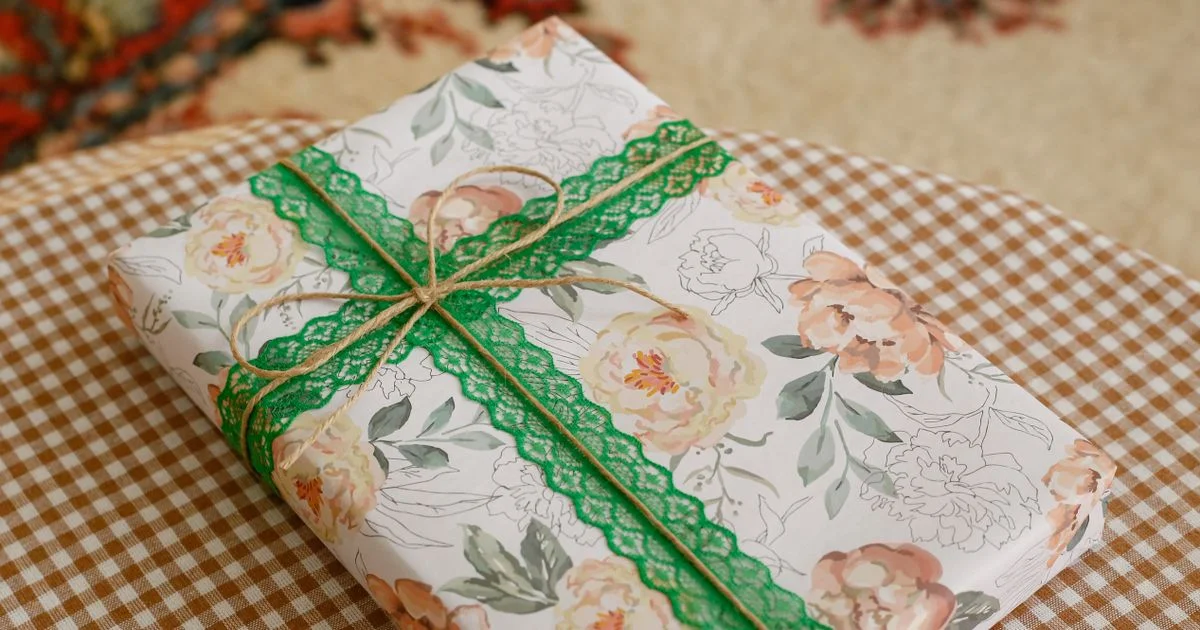
There is a moment, somewhere between checkout and the mailbox, when a gift stops being a product and becomes yours whether you want it or not. That moment is when the engraver starts. Personalized Gifts Under $50 are the easiest category on Etsy to shop and one of the hardest to undo, and the difference between those two facts is worth understanding before the occasion rather than after it.
This is an independent editorial review. Etsy did not review or approve this article.
Personalized Gifts Under $50 are priced before the shipping clock starts
The listing price on a custom gift is rarely the amount that leaves your account. Four separate lines sit on top of it, and only the first is obvious.
- Shipping, which on a handmade item is often a real cost rather than a rounding error, because one person is packing one parcel.
- Expedited or rush production, which is a separate charge from expedited shipping and is the one people confuse under time pressure.
- Gift wrap or a gift note, offered by some shops and not others, since each shop sets its own options.
- Sales tax, applied at checkout according to where the parcel is going.
Etsy, Inc. is a New York company, headquartered at 117 Adams St, Brooklyn, and for buyers in North and South America the purchase contract is with that entity under New York law. That matters less for the price than for what happens when something goes wrong, because it places a US buyer inside US consumer rules rather than outside them.
The practical effect of a sub-$50 budget is that the making time, not the materials, is what you are buying. A name cut into acrylic and a name hand-stitched into linen can carry similar prices and very different amounts of human labor, and the second one is the one with a production window attached.
Where affordable personalized gifts are genuinely the better buy
Customization earns its money where the personal detail is the entire point of the object and the object itself is simple. A dated keepsake, a set of initials on something someone will use daily, a map of a place that means something: in each case the personalization is doing work no generic version can do, and the underlying item is cheap enough that the labor is most of the value.
The case against affordable personalized gifts is the opposite one. Where the base item is technical and the personalization is cosmetic, you are usually paying a premium to add a name to something whose quality you cannot inspect. A monogrammed gadget accessory is still a gadget accessory, and the monogram does nothing for how well it works. Our look at whether mug warmers are worth it is a useful companion here, because it is exactly the sort of item that gets bought as a gift and judged on the wrong feature.
One more case for the cheaper end: a first order from a shop you have not used before. Buying small the first time costs you very little to learn whether the photographs match the parcel.
The 30-day rule that decides whether it arrives
This is the strongest right a US buyer has on a custom order, and it comes from the federal government rather than from the platform. The FTC’s Mail, Internet, or Telephone Order Merchandise Rule, at 16 CFR Part 435, governs anything you order online.
Under section 435.2(a)(1), a seller must not solicit an order unless, at the time of the solicitation, it has “a reasonable basis to expect that it will be able to ship any ordered merchandise to the buyer” within the time it stated, or, where no time is stated, “within thirty (30) days after receipt of a properly completed order from the buyer.” The rule defines shipment tightly, as “the act by which the merchandise is physically placed in the possession of the carrier,” so a parcel is not shipped because a label has been printed.
When a seller cannot meet that window, it has to offer you “an option either to consent to a delay in shipping or to cancel the buyer’s order and receive a prompt refund,” and it must either give “a definite revised shipping date” or tell you it “is unable to make any representation regarding the length of the delay.” A prompt refund means money returned by a method at least as fast and reliable as first class mail within seven working days, or within one billing cycle on a credit sale.
Read that against a personalized order and the sequence becomes clear. The stated processing time on the listing is the number that binds the seller. If they miss it, your cancellation right appears, and it appears whether or not the shop’s own policy mentions cancellations at all.

Cheap custom gifts and the return you may not have
Etsy is a marketplace, not a shop, and the single most expensive consequence of that sits in its returns policy. Etsy states plainly that “Sellers aren’t required to accept returns, exchanges, or provide a refund unless stated in the return policy on their listing.” There is no marketplace-wide return window that overrides a seller who has chosen not to offer one.
Etsy’s own seller guidance goes further on customization specifically. It suggests sellers tell buyers in their shop FAQs or messages that they “do not accept returns of customized or personalized orders” — which tells you how normal that exclusion is. And where a return is accepted, Etsy is explicit about who pays for it: “Buyers are responsible for any return shipping costs.”
So cheap custom gifts carry a specific risk that cheap generic gifts do not. A $40 generic item you dislike is a $40 problem minus whatever you can recover. A $40 personalized item you dislike is usually a $40 problem in full, and if the shop does accept the return, the postage comes out of the refund.
The fix is not to avoid the category. It is to read two fields on the listing before ordering: the return policy, and the processing time. Both are printed, both are short, and between them they tell you the entire downside of the purchase.
Who can cancel, and when
Cancellation on Etsy does not work the way people expect, and it is worth knowing before the order is placed rather than at 11pm the night you change your mind.
- You cannot cancel the order yourself. Etsy tells buyers that “You may be able to cancel your order depending on the shop’s policies” and that “the seller you purchased from is the best person to help you.” The mechanism is a message, not a button.
- Only the seller can execute it. Etsy’s cancellation policy permits a seller to cancel where “The seller agreed to a buyer request to cancel their order before dispatch, and the seller has issued the buyer a full refund,” among a small number of other cases.
- Dispatch is the deadline that matters. On a made-to-order item, the practical deadline is earlier still, because the work has already been done.
- A case with Etsy is a later step, not a first one. The option to open one “only appears after you’ve contacted the seller for help at least 48 hours ago.”
The underlying principle is one sentence from Etsy’s own help pages: “Each seller on Etsy manages their own orders and makes decisions about cancellations, refunds, and returns.” The price is set by a national marketplace. The policy is set by one person.
When budget-friendly personalized gifts stop being the cheap option
There is a point where budget-friendly personalized gifts quietly become the expensive choice, and it is easier to spot than it sounds. It arrives the moment the personalization stops being the reason the gift exists and starts being decoration on something judged by how well it works. A name on a keepsake is the product. A name on a tool, a bottle or a device is a surcharge the recipient will stop noticing within a week, paid on an item whose actual quality you could not inspect.
The other half of that point is recoverability. Adding a name to a functional object removes your ability to return it and adds nothing to how it performs, which is the worst trade available in the category.
What you get at each tier
| Tier | What the money buys | What it does not buy | Best fit |
|---|---|---|---|
| Add-a-name items at the bottom of the range | A machine-applied name or date on a simple base item, usually with a short production window | Any real say over materials, and rarely a return option | Volume gifting, teachers, colleagues, party favors |
| Mid-range personalized | Better base materials and a maker who will answer questions before ordering | Speed, since handwork lengthens the processing time | Birthdays and anniversaries planned more than two weeks out |
| Made-to-order and commissioned | Genuine one-off work and direct contact with the maker | Any practical ability to cancel once work has begun | Milestone gifts where the object is the point |
| Digital personalized files | Instant delivery and no shipping cost at all | Returns of any kind, since Etsy does not allow return policies on digital listings | Last-minute gifts and anything you will print yourself |
| Generic gift, bought well | Full return rights wherever you buy it and no production clock | The one thing personalization is for | Anyone whose taste you are unsure of |
Where the money is genuinely wasted
Paying to rush the wrong half of the journey. Expedited shipping does nothing about a five-day production window, and on a personalized order the production window is usually the larger number. If a date is tight, buy the faster processing time, not the faster courier.
Buying a second identical item as insurance. On a sub-$50 budget the temptation is to order two similar things in case one disappoints, which converts a small purchase into a medium one and leaves you unable to return either.
Paying for gift wrap on a parcel that will be opened by the recipient at the door. Where the item ships directly to the person, a gift note usually does all the work the wrap was going to do. The add-ons priced at checkout are where a cheap purchase quietly stops being cheap.
Frequently Asked Questions
Four things buyers ask once they have read a shop’s policies properly.
Can I return a personalized gift if I do not like it?
Only if that specific listing says so. Etsy does not require sellers to accept returns, and its own guidance to sellers openly contemplates excluding customized orders. Check the listing’s return policy before ordering, because after the name is applied it is the only document that matters.
What happens if it does not arrive in time for the occasion?
If the seller misses the shipping time it stated, or thirty days where it stated none, 16 CFR Part 435 entitles you to be offered the choice between consenting to the delay and canceling for a prompt refund. That right does not depend on the shop’s own policy.
Is it cheaper to buy one nicer personalized gift or several small ones?
One, in nearly every case, because personalization costs are largely fixed per item. Five names on five objects is five setups; one name on one object is one. The per-gift cost of small custom items rises much faster than the per-gift cost of small generic ones.
Does a lower price mean a faster delivery?
No, and often the reverse. The cheapest custom items tend to come from the smallest shops, where one person makes everything in order. Read the processing time field rather than inferring it from the price.
Bottom line
A personalized gift under fifty dollars is usually good value, because the labor is the product and the labor is cheap at that size. Just buy it against the two numbers that decide the downside — the stated processing time and the listing’s return policy — rather than against the photographs.


