

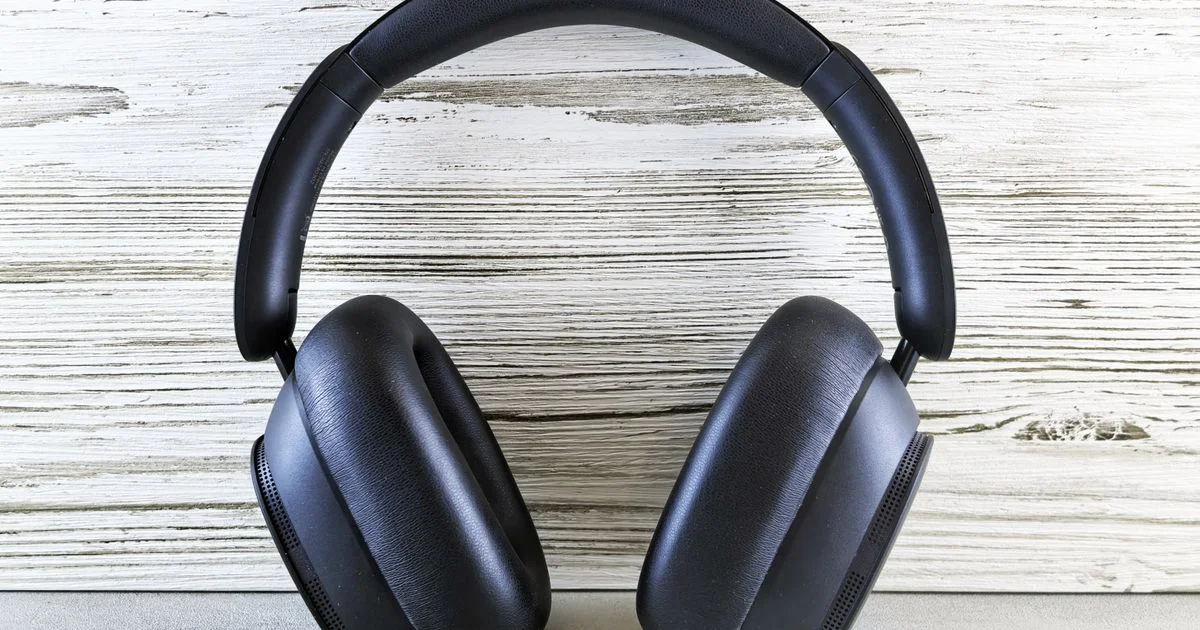
Apple sells replacement ear cushions for AirPods Max as a separate product, and the listing names the connector generation they fit. That one detail tells you most of what you need to know about shopping for a budget AirPods Max: the sticker covers the headphone, and the two parts that decide how long it lasts are priced and scheduled somewhere else entirely.
This is an independent editorial comparison. We are not affiliated with Apple, and no brand reviewed or approved this article.
What a budget AirPods Max actually costs you
Break the ownership of a pair of over-ear headphones into what you pay once and what you pay again, and the picture changes. A budget AirPods Max purchase is really three decisions stacked on top of each other: which generation you buy, where you buy it, and whether you buy the protection plan alongside it.
Apple’s own service terms set the shape of the second and third decisions. The one-year limited warranty, Apple says, “covers your device and all the Apple-branded accessories that come in the box with your product against manufacturing issues for one year.” It also says plainly what it leaves out: the warranty “doesn’t cover accidental damage or batteries that wear down from normal use.” Those are the two ways a headphone usually dies, and neither is included.
The battery has a published threshold rather than a published clock. Apple will “replace the battery for no extra charge if the capacity drops below 80%.” Above that line you keep the battery you have, whatever it feels like on a long flight. Below it, the fix exists. That is a clear rule, and it is also a reminder that a cell in a headphone is a wear part with a defined end.
- Bought once: the headphone, the cable in the box, the case in the box.
- Bought again, on a schedule you do not control: ear cushions, which Apple sells separately and lists by connector generation.
- Bought again, on a threshold you do not control: the battery, free below 80% of capacity and yours to live with above it.
- Optional, bought once, covers both of the above differently: AppleCare+, which adds “unlimited repairs for drops and spills” and drops the battery fee.
Where an affordable AirPods Max comes from
There are three honest routes to an affordable AirPods Max, and they are not equally safe. Apple’s own refurbished channel is the conservative one, because Apple publishes exactly what it does to the hardware. Every Certified Refurbished product, Apple says, “completes a rigorous refurbishment process that includes full functional testing,” arrives “with genuine Apple replacement parts (as needed),” and carries “our standard one-year limited warranty.” Apple also states that you “have the option of getting additional coverage by purchasing AppleCare products,” and that the unit ships “packaged in a brand new white box” with “all accessories, cables and operating systems.”
Read that list as a set of guarantees you are buying, not as a discount. A refurbished unit from Apple starts the same warranty clock a new one does, and it is still eligible for the protection plan. A private sale gives you neither. That is the entire difference between the two cheap routes, and it is worth more than most spec comparisons.
- Decide the generation first, because the consumables are keyed to it.
- Check whether the seller can transfer or establish a warranty at all, rather than asking how old the unit is.
- Price the ear cushions for that generation before you agree to anything, since they are a separate purchase.
- Ask what the battery does after an hour of listening, not what the listing claims it does.
- Decide on the protection plan while the unit is still eligible, because eligibility is time-limited.

Chasing an AirPods Max under $500 on the older generation
The obvious way to find an AirPods Max under $500 is to buy a generation back. Apple currently sells AirPods Max 2 with a USB-C connector, and says “the USB-C connector lets you charge your AirPods Max 2 with the same cable that charges your iPhone, iPad, Mac, or other Apple devices.” An earlier run used Lightning, and Apple still lists replacement ear cushions for “AirPods Max (Lightning Connector)” as their own product.
That is the cost of going back a generation, stated plainly by the manufacturer: your consumable is a generation-specific item. Cushions for one connector run are not the cushions for the other. As long as the older part is stocked, the older headphone is a reasonable buy. When it stops being stocked, the headphone is still a headphone, but the part that touches your face is no longer a catalog item, and replacing it becomes somebody else’s problem to solve.
The second cost is subtler. Buying older does not shorten the warranty rules; it shortens the window in which you can still attach coverage to the unit. A private-sale unit that is already out of its first year cannot be rescued with a protection plan later.
What AirPods Max deals 2026 do not discount
A sale price moves one number. Scanning for AirPods Max deals 2026 is a reasonable way to spend an afternoon, but it is worth knowing which numbers a discount cannot touch. It does not change the 80% battery threshold. It does not change the exclusion of accidental damage. It does not change the fact that ear cushions are a separate line item. And it does not change the terms attached to the fast-swap option.
That last one is worth reading before you need it. Express Replacement Service, Apple says, “is an AppleCare benefit that is not available in all countries or regions.” A temporary hold goes on your card, and Apple “will release the temporary hold on your card after we process your original device and confirm that the issue is covered.” If your original “is not returned within 10 business days or is found ineligible for service due to unauthorized modifications or severe damage, the hold will be charged to your card.” A headphone bought cheaply and opened by a previous owner is exactly the unit that fails that test.
What you get at each tier
| Route | What you are guaranteed | What you take on yourself | Best for |
|---|---|---|---|
| New, current generation | Full warranty clock, current consumables in stock, protection plan eligible | The highest entry cost of the three | Anyone who plans to keep them for years |
| Manufacturer refurbished | Functional testing, genuine replacement parts as needed, the same one-year limited warranty, protection plan still available | Limited color and stock availability | The best-value route for most buyers |
| Older generation, new or refurbished | Same warranty rules, a working headphone | Consumables tied to a connector generation that is no longer current | Short-horizon buyers and second pairs |
| Private sale, used | Nothing in writing | Battery state, cushion condition, and any service eligibility at all | Buyers who can inspect in person and accept the risk |
Where the money is genuinely wasted
Three places, in order of how much they cost people.
The first is buying used to save money and then discovering the cushions are flattened or peeling. Cushions are the part that fails first on any over-ear headphone, because they are foam and skin contact. They are also the one part on this model that Apple sells as a catalog item, which means the repair is easy and the saving is smaller than it looked.
The second is skipping the protection plan on a pair you intend to carry. The warranty excludes accidental damage in so many words, and a headphone that lives in a bag is a headphone that will eventually be sat on. Apple’s plan covers “unlimited repairs for drops and spills.”
The third is paying for a fast-swap service you will never qualify for. Express Replacement is tied to the protection plan and to an unmodified unit returned inside ten business days. If you bought privately and the previous owner opened it, that benefit is not yours.
There is a fourth, quieter one: replacing a working pair because a new generation appeared. The headphone you own does not get worse when a successor ships. If you want to understand what the noise-cancellation premium buys before you spend again, our guide to what is worth paying for in noise-cancelling headphones covers that ground.
Frequently Asked Questions
These are the questions that decide whether a cheap pair stays cheap.
Is a refurbished pair from the manufacturer as good as new?
On paper it carries the same protections. Apple states that Certified Refurbished units get full functional testing, genuine Apple replacement parts as needed, and the standard one-year limited warranty, and that additional coverage can still be purchased. Cosmetically you are relying on that process rather than on a sealed box.
How long does the battery last before it needs replacing?
There is no published calendar answer, only a published threshold. Apple replaces the battery at no extra charge once capacity drops below 80%. How long that takes depends on how often you charge it and in what conditions, which is why a used listing’s age tells you less than its charge history would.
Can I replace the ear cushions myself?
Apple sells replacement ear cushions as a standalone product, listed by connector generation. Treat them as a planned consumable rather than a repair, and check availability for the generation you are buying before you buy it.
Does the protection plan pay for itself?
It depends entirely on whether you carry the headphones. For a pair that lives on a desk, the accidental-damage cover is close to dead weight. For a pair that commutes, the warranty’s explicit exclusion of accidental damage is the whole argument for buying it.
Bottom line
The cheapest sensible route here is the manufacturer’s refurbished channel, because it is the only discount that comes with the warranty and the protection-plan eligibility attached in writing. Going a generation back saves more and costs you a consumable supply chain. Buying privately saves the most and guarantees nothing at all.


1 Comment
Comments are closed.