

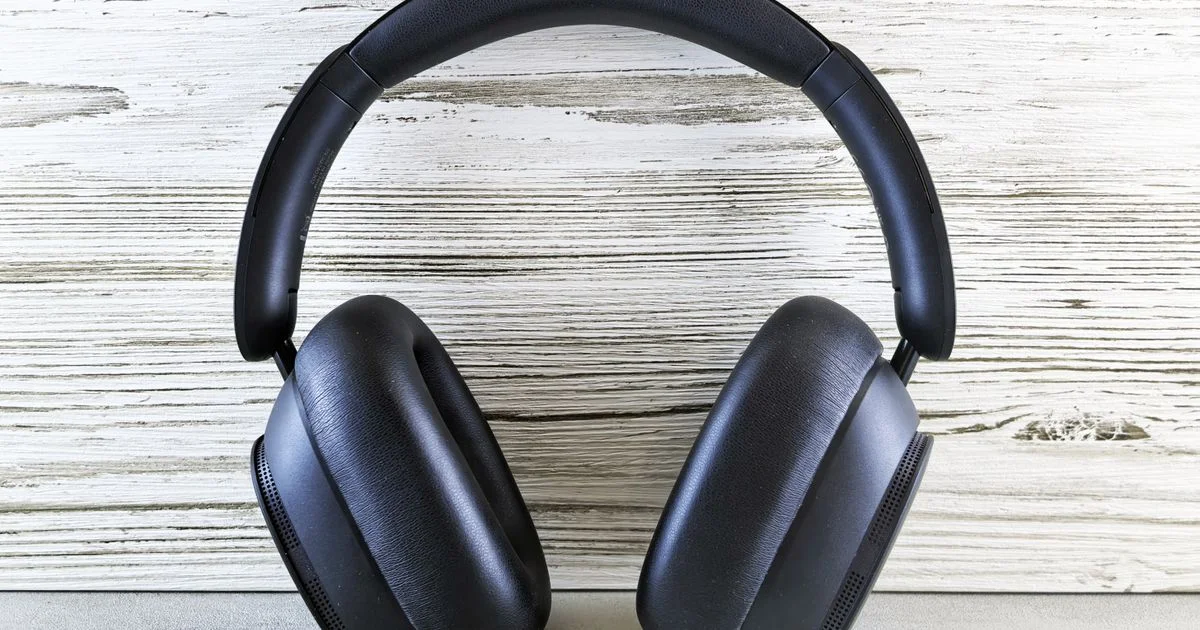
The noise-cancelling shelf runs from pocket change to a serious chunk of a paycheck, and every pair on it claims to shut the world out. The truth is that the best noise-cancelling headphones for most people are not the most expensive ones, because the biggest jump in noise reduction happens early in the price range. What the money buys after that point is comfort, tuning and convenience — real things, but not the silence you think you are paying for.
Key Takeaways
- Noise cancelling works on low, steady sound — engine drone and HVAC hum, roughly 30–500 Hz. It does far less against voices and sudden noises.
- Above about 1 kHz the physical seal does the work, not the electronics. A poor fit undoes an expensive pair.
- Mid-range models close most of the gap to flagships on raw noise reduction; the flagship premium mostly buys comfort, app control and transparency quality.
- Running ANC costs roughly 15–30% of battery life, so headline battery numbers are usually measured with it off.
- The cheapest pairs cost you in wind handling, transparency mode and long-session comfort — not usually in outright quiet.
What the Best Noise-Cancelling Headphones Actually Get You
The short answer: buy in the mid-range, spend your attention on fit rather than specs, and only step up to a flagship if you wear headphones for hours at a stretch. Noise reduction improves steeply from budget to mid-range and then flattens out. Comfort, transparency mode and software polish keep improving past that point, which is why flagships still make sense for heavy users and make very little sense for occasional ones.
The trap is assuming the price tag maps onto quiet. It maps onto the whole experience — how the pair feels in hour three, how naturally you can hear a barista, how well it handles wind — and only loosely onto how much noise disappears.
What ANC Actually Blocks — and What It Doesn’t
Understanding this one thing will save you more money than any review roundup.
Active noise cancelling is very good at low-frequency, steady, predictable sound: jet engine drone, train rumble, bus diesel, air conditioning, the hum of a refrigerator or a coffee shop’s ventilation. Engine drone sits roughly in the 30–500 Hz range and HVAC hum around 60–500 Hz, and that is exactly where the technology shines.
It is much weaker everywhere else. Speech is fast and variable and sits in a range that is genuinely hard to cancel, which is why the office chatter you wanted gone is still there. Sudden sharp sounds — a door slam, a dog bark, dishes clattering — are over before the system can respond. Higher frequencies like keyboard clicks and sibilance are handled almost entirely by the physical seal around your ear, not by the chip.
That seal matters enormously. Break it and you lose twice over: high frequencies leak straight in, and the cancellation algorithm gets confused because its acoustic model no longer matches what is happening. A well-fitting mid-range pair will out-perform a flagship that sits badly on your head. Glasses, thick hair and a small or large head all change this, which is why trying a pair on beats reading a spec sheet.

What You Get at Each Price Tier
Entry level
Budget pairs now deliver genuinely useful noise reduction — this is the tier that has improved the most in recent years. Models like the JLab JBuds Lux ANC and Edifier W830NB show what is possible down here, and some even include extras that used to be premium-only, such as USB-C audio passthrough and multiple ANC modes. What you give up is refinement: less processing headroom, less firmware tuning, weaker wind handling, and a transparency mode that is a simple on/off toggle rather than something adaptive.
Mid range
This is the value sweet spot, and it is where most people should stop. Pairs like the Sony ULT WEAR and Nothing Headphone (a) bring properly competitive cancellation, better materials, app-based EQ and battery life that comfortably clears a long-haul flight — the Nothing pair is rated past 75 hours. The remaining gap to a flagship is real but small, and it is mostly felt over long sessions rather than in the first ten minutes.
Where the top ANC headphones 2026 money actually goes
Among the top ANC headphones 2026 buyers are choosing between, the extra spend goes to clamp force and padding that stay comfortable for hours, transparency modes that sound like the room instead of a microphone, richer app control, broader codec support, and multipoint that works reliably across two devices. Those are worth paying for if you live in your headphones. If you use them on a weekly commute, you are paying for headroom you will not reach.
Features That Cost a Lot and Change Little
Several selling points reliably raise the price without changing much in daily use:
- Hi-res codec support. Over Bluetooth, in a noisy environment, with ANC running, the audible difference is small for most listeners.
- Headline dB claims. “Up to 30 dB” figures come from lab measurements under perfect conditions and say nothing about which frequencies are reduced.
- Wear detection. Pleasant when it works, mildly annoying when it misfires. Not a reason to move up a tier.
- Spatial and virtual sound modes. Fun to demo, rarely used daily, and often switched off after a week.
- Enormous battery ratings. Anything past a couple of long-haul flights is a number, not a benefit — and it drops 15–30% once ANC is on anyway.
Sony vs Bose Noise Cancelling: What the Flagship Premium Buys
The sony vs bose noise cancelling question is the classic flagship face-off, and the honest finding from side-by-side testing is that on raw noise cancellation there is no clear winner — both are excellent across airplane, train and road noise. The differences are elsewhere, and they are the kind that should decide your purchase only if you already know you want a flagship.
Sony’s WH-1000XM6 offers a 10-band equalizer in its app, LDAC and LC3 codec support, Auracast, and measured battery life past 37 hours. Bose’s QuietComfort Ultra (2nd Gen) counters with a 3-band EQ, Snapdragon Sound and aptX Adaptive, a USB-C lossless connection, and ActiveSense in transparency mode, which keeps sudden loud sounds from spiking through — but it measured closer to 27 hours. Neither is the better pair in the abstract; they simply spend the premium differently.
| If this matters most | Look for | What you give up |
|---|---|---|
| Quiet on a long flight | Mid-range or better, with a good seal | Little — this is the easy case |
| Blocking office conversation | Strong passive isolation over strong ANC | Bulkier earcups and more heat |
| All-day wear | Flagship comfort and clamp tuning | The largest price step in the category |
| Hearing announcements clearly | Adaptive transparency, not a toggle | Usually mid-range and up only |
| Walking outdoors in wind | Dedicated wind-reduction modes | Budget pairs handle this worst |
| Switching between laptop and phone | Reliable multipoint | Often missing at entry level |
| Lowest cost per hour | A durable mid-range pair with replaceable pads | No flagship comfort or codec extras |
Best Noise-Cancelling Headphones for Travel: Cost Per Hour of Listening
Choosing the best noise cancelling headphones for travel is where cost-per-hour framing is most honest, because travel is when you genuinely wear them for long stretches. A pair used two hours a day for three years works out to a strikingly small cost per hour even at flagship money — while an expensive pair used on four flights a year does not.
Work out your own answer in this order:
- Estimate the hours per week you will realistically wear them, not the hours you imagine.
- Multiply by roughly 150 weeks for a three-year life, which is a fair expectation for a well-built pair.
- Divide the price you are considering by that number of hours.
- Check whether the earpads are user-replaceable — pads wear out long before drivers do, and replaceable ones can double a pair’s life.
- Compare that hourly figure against the tier below before you commit.
Where Buying Cheap Genuinely Costs You Later
The value case for mid-range over budget is not really about how much noise disappears. It is about three things that only show up after you own the pair.
The first is wind. Cheap ANC tends to amplify wind into a roar, which makes a budget pair frustrating for anyone who walks or cycles rather than sits still. The second is transparency mode: a simple on/off toggle makes ordering a coffee or hearing a gate announcement a matter of pulling the headphones off, which is exactly the friction you paid to avoid. The third is build — hinges, headband padding and earpads are where cost is cut hardest, and they are the parts that fail first. A pair that dies in eighteen months is not cheap.
None of that argues for a flagship. It argues for not buying at the very bottom if you will use these daily.
Frequently Asked Questions
A few things come up whenever people start comparing pairs across price brackets.
Do expensive headphones actually cancel more noise?
Somewhat, but the curve flattens quickly. The step from budget to mid-range is large; the step from mid-range to flagship is modest on cancellation and much bigger on comfort, transparency and app control.
Why can I still hear people talking?
Because speech is exactly what ANC handles worst — it is fast, variable, and sits in a hard-to-cancel range. If your goal is blocking conversation, prioritize passive isolation and a good seal over a bigger ANC claim, and expect reduction rather than silence.
Are earbuds or over-ear headphones better for noise cancelling?
Over-ear pairs generally win on low-frequency cancellation and long-session comfort. Earbuds win on portability and can seal very well if the tips fit properly. For flights and desk work, over-ear is usually the better value per hour.
Does noise cancelling drain the battery much?
Yes — roughly 15–30% depending on the model. Advertised battery figures are often quoted with ANC off, so mentally discount any headline number before comparing pairs.
The Bottom Line
Noise cancelling is one of the few categories where the mid-range genuinely is the right answer for most buyers, because the physics stops rewarding extra spending sooner than the marketing admits. Get the fit right, buy a pair sturdy enough to last three years, and put the difference toward something that improves with money.


3 Comments
Comments are closed.