

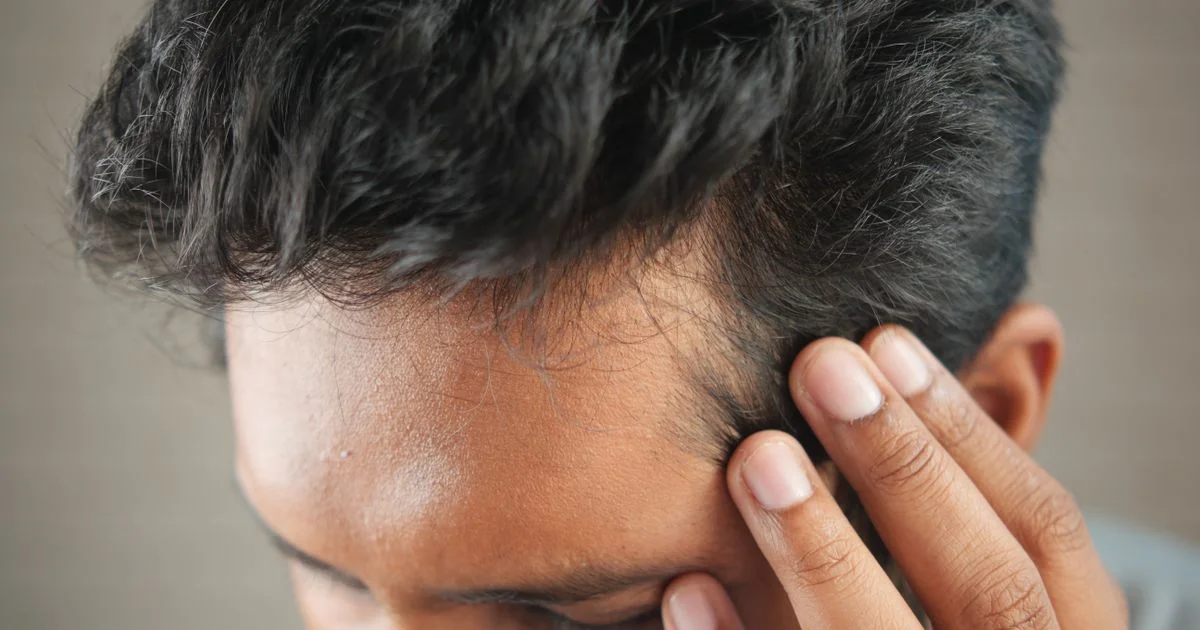
A single strand of hair can spend two to six years in its growing phase before it rests and falls out. A laser cap is usually judged in about six weeks, and the gap between those two clocks is where this entire purchase lives. Priced against that calendar rather than against a launch discount, is laser hair growth device worth it becomes a question about how long you will keep using it, not about how many diodes are in the lid.
This article is about cost. It draws on the FDA’s device classification regulations, two published 510(k) clearance files and MedlinePlus, and it is general information rather than medical or dermatological advice. Hair loss has several causes that a clinician can tell apart and a product page cannot. Sudden shedding, loss in patches, or a scalp that is painful, scaly or inflamed belongs with a doctor rather than with a device.
Priced against the calendar, is laser hair growth device worth it?
These devices are one-time purchases sold into an indefinite routine, which is an unusual shape for a consumer product and the reason the arithmetic surprises people. There is no cartridge, no gel, no replacement head and no subscription: the whole cost arrives at once. What arrives afterward is a standing appointment, several sessions a week, for as long as you want the result to continue.
That makes cost per session the only honest framing, and it moves enormously with one variable: whether you are still using it in year two. A device used three times a week for two years costs a small fraction per session of the same device used three times a week for two months and then left in a drawer. Nothing about the hardware changes. The denominator does.
MedlinePlus puts the underlying condition in context: androgenetic alopecia “affects an estimated 50 million men and 30 million women in the United States,” and “more than 50 percent of men over age 50 have some degree of hair loss.” It also describes the mechanism that governs your timeline — “each strand of hair normally grows for 2 to 6 years, goes into a resting phase for several months, and then falls out.”
Read that alongside a six-week trial window and the problem is obvious. You are being asked to judge a slow biological cycle on a fast retail one. So price it in this order rather than the order the listing suggests:
- Decide how many sessions a week you will realistically complete, and be pessimistic about it.
- Multiply by the number of years you expect to keep the routine going, not by the return window.
- Divide the purchase price by that total. The result is the only figure that compares two devices honestly.
- Add the warranty term and the battery’s likely service life as separate lines, because both can end before the routine does.
What costs nothing, and where a cheap laser hair growth device is genuinely enough
Before pricing hardware at all, two things cost nothing and change the decision. The first is photographs: the same spot, the same light, the same time of day, once a month. Without them you are comparing a memory to a mirror, and the mirror always wins. The second is a diagnosis, because the pattern MedlinePlus describes — receding above both temples into an “M” shape in men, a widening part at the top of the head in women — is one cause of hair loss among several, and the others respond to different things entirely.
After that, a cheap laser hair growth device is genuinely enough in a specific case: when the cleared indication matches your situation, when you are treating a limited area, and when you are honest that the thing you are buying is a schedule rather than a machine. Where the cheap tier stops being enough is coverage. A band or comb treats a narrow strip at a time and depends entirely on you moving it methodically; a helmet treats the whole scalp without technique. If you know you will not be diligent, the cheaper form factor is the more expensive choice.
- Comb or band — lowest cost, smallest treated area, most dependent on your own consistency and technique.
- Cap or helmet — higher cost, hands-free, treats the whole scalp in one sitting, far easier to keep up for years.
- Clinic sessions — no hardware to own, but priced per visit and per trip, which is the opposite cost curve.
- Doing nothing but documenting — free, and the baseline every other option has to beat.
What the laser hair growth device price does not include
The laser hair growth device price is unusually complete for a beauty device, and that is the strongest thing in its favor. There is no consumable, which is exactly where at-home devices usually recoup their discount. What the figure does not include is time, and time is the real cost here: a session several times a week, indefinitely, is a standing commitment measured in hours per year rather than dollars per month.
Three other costs sit outside the sticker. A consultation, if you have not had one, which belongs first rather than last. The battery, since a rechargeable device has a finite number of charge cycles and a cap kept for five years may not hold a session by the end of it. And the warranty term, which on something used several times a week for years is a more meaningful specification than the diode count. Then there is the cost of stopping: nothing in the cleared indications promises a permanent change, so budget for the routine rather than the purchase.

The clearance is narrower than the marketing
This is the part most listings skip, and it is free to verify. Low-level laser devices for hair are cleared by the FDA under 21 CFR 890.5500, whose plain identification reads: “An infrared lamp is a device intended for medical purposes that emits energy at infrared frequencies (approximately 700 nanometers to 50,000 nanometers) to provide topical heating.” They sit in Class II under product code OAP.
Two details follow from that, and both are arithmetic rather than opinion. First, one published clearance file describes its own device as using diodes at 650 to 660 nanometers — which is visible red light, below the infrared range the regulation names. The product category and the physics do not line up neatly, and knowing that tells you the classification is about regulatory lineage rather than about how the thing works.
Second, and more useful at the checkout: the cleared indications are narrow. Two separate 510(k) files describe their devices as intended “to promote hair growth in males with androgenetic alopecia who have Norwood Hamilton Classifications of IIa to V and Fitzpatrick Classification of Skin Phototypes I to IV, and in females with androgenetic alopecia who have Ludwig-Savin Classifications of I-II and Fitzpatrick Classification of Skin Phototypes I to IV.” If your pattern of loss is more advanced than those ranges, or your skin phototype falls outside I to IV, the device was not cleared for your situation, whatever the listing implies.
And clearance itself is a weaker statement than most buyers assume. The FDA’s own letter says it “determined the device is substantially equivalent (for the indications for use stated in the enclosure) to legally marketed predicate devices,” and adds that such a determination “does not mean that FDA has made a determination that your device complies with other requirements of the Act.” Substantially equivalent to something already sold is not the same as demonstrated to work for you.
Diode counts, and why a budget laser hair growth device may be cleared for exactly the same thing
The number on the box is the diode count, and it is the ladder the whole category is priced on. It is also where a budget laser hair growth device and a premium one can turn out to be closer than the listings suggest. One clearance file covers two models of the same helmet: one with 80 diodes and one with 162, each rated at under 5 milliwatts per point. Both are described under a single set of indications for use. The regulator did not treat the doubled diode count as a different claim.
That does not make the counts interchangeable in practice — more emitters across the same scalp should mean better coverage and shorter sessions, which matters for a routine you have to sustain. It does mean the number is a coverage and convenience specification rather than a proof of a better outcome, and it should be priced that way.
| Tier | What the money buys | Who it genuinely suits | Where it costs you later |
|---|---|---|---|
| Entry | Comb or narrow band, low diode count, manual passes over the scalp | A small, defined area and somebody who is realistically going to be methodical | Missed coverage and abandoned routines, which make the cost per session climb sharply |
| Mid-range | Cap or helmet, hands-free, whole-scalp coverage, rechargeable | Anyone treating a pattern that falls inside the cleared classifications | Battery life over several years, and a warranty term that ends long before the routine does |
| Premium | Highest diode counts, shorter sessions, better fit and finish | Anyone whose obstacle is session length rather than money | Paying a large premium for a specification the clearance treats as equivalent |
Where the money is genuinely wasted
The largest waste in this category is not a bad device. It is an abandoned one. A device used enthusiastically for six weeks and then shelved has an effective cost per session many times higher than the same device used steadily for two years, and it is the commonest outcome by a wide margin. Anything that makes the routine survivable — a hands-free form factor, a charging spot you walk past, a fixed time of day — is worth more than diodes. After that: paying a premium for a diode count the clearance treats as equivalent; buying before establishing what is causing the loss; and treating a six-week return window as a fair trial of a multi-year growth cycle.
Buying too cheaply has its own bill. A comb bought on price alone, by somebody who knows they will not use it three times a week, is a drawer ornament. And skipping the consultation to save a co-pay can mean treating the wrong condition for a year. Our look at what an invisible health tracker actually costs to keep covers the same trap from a different angle.
Frequently Asked Questions
These four come up constantly, and each has an answer you can check against a published document rather than a listing.
How long before I can tell whether it is doing anything?
Longer than a return window. Hair grows for years before resting, so a fair look means monthly photographs of the same spot in the same light. Anyone promising a verdict in weeks is describing a schedule the biology does not support.
Does FDA clearance mean it is proven to work?
No. Clearance means the FDA determined the device is substantially equivalent to a device already legally on the market, for the specific indications written into the file. It is a market-entry decision about similarity rather than a finding about how well it will work for you.
What happens if I stop using it?
Assume the effect stops with it. Nothing in the cleared indications describes a permanent change, and a treatment that works by repeated stimulation is a routine rather than a course. That is why the honest price is per session over years, not per unit.
Is a helmet better than a comb?
It is easier, which over years usually amounts to the same thing. A helmet covers the whole scalp without technique; a comb depends on you moving it correctly every time. Pick for the habit you will keep.
Bottom line
This is one of the few at-home devices with no consumable, which makes it cheap per session for anyone who keeps it up for years and expensive for anyone who does not. Check the cleared classifications against your own situation before pricing anything, and buy the form factor you will still be using next winter.


1 Comment
Comments are closed.