

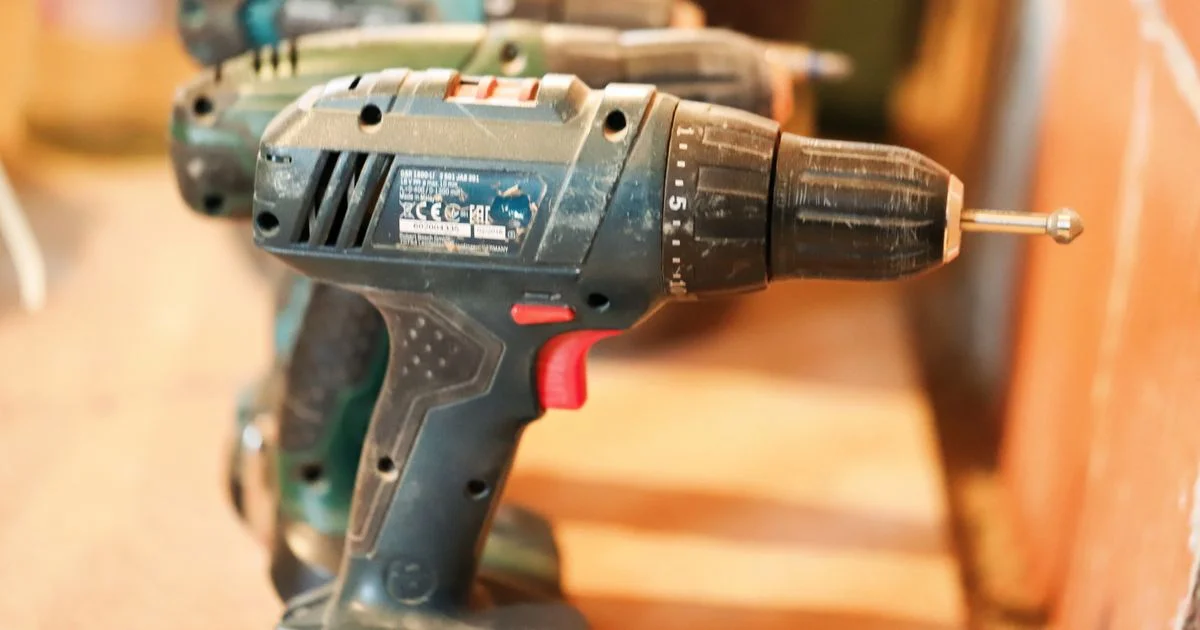
Shopping for a first drill means wading through voltage numbers, torque claims and kit bundles that all look equally important. The best cordless power drill for beginners is usually decided by something the box barely mentions: which battery platform you are quietly joining, and what that platform will cost you for years afterward. The tool in your hand is often the cheapest part of the decision you are actually making.
Key Takeaways
- “20V MAX” and “18V” describe the same five-cell battery, labeled two different ways. It is a marketing difference, not a power difference.
- The batteries are the real expense. They do not work across brands, and that incompatibility is deliberate.
- A 12V drill is lighter and handles almost every household job. Most beginners buy more voltage than their projects need.
- Brushless motors genuinely run longer per charge, but the payoff scales with how much you use the tool — which for most homeowners is not much.
- A kit with two batteries and a charger is almost always better value than a bare tool, and it is the right way to enter a platform.
What the Best Cordless Power Drill for Beginners Is Really Worth
The short answer: buy a mid-range 12V or 18V drill/driver as a kit from a brand sold everywhere near you, and stop. For hanging shelves, assembling furniture, fitting blinds and mounting hardware, the difference between a competent drill and an expensive one is almost invisible, while the difference between a good battery system and a dead-end one shows up every year.
This is the opposite of how the category is usually sold. Marketing pushes torque figures and voltage, because those are easy to print. The things that actually determine whether you are happy in three years are weight, whether the batteries are still available, and whether the other tools you eventually want run on the same pack.
The Number on the Box That Means Nothing
Start with the most common source of confusion, because it is worth real money to see through it. An 18V pack and a 20V MAX pack are typically the same thing: five lithium-ion cells in series. Each cell sits at roughly 3.6 volts nominal and reaches about 4.0 volts when fully charged. Five cells at 3.6V gives 18V nominal; the same five cells at 4.0V gives 20V maximum. American brands tend to advertise the peak figure while European and Asian manufacturers quote the nominal one.
So a “20V MAX” drill is not more powerful than an 18V drill because of the label. Real performance differences come from the motor and the electronics that turn that voltage into torque and speed. If you are comparing two tools and the only difference you can find is 18 versus 20, you have found no difference at all.
Torque ratings deserve similar caution. They are measured in ways that vary between makers and are quoted at maximums you will rarely reach driving screws into a stud. For a lightweight power drill comparison, weight in the hand and balance matter far more to a beginner than a headline torque figure.

The Real Cost Is the Platform, Not the Drill
Here is the part that decides your long-term spend. Battery platforms do not cross brands — a DeWalt 20V pack will not fit a Milwaukee M18 tool, and a Makita charger will not work with Bosch batteries. That incompatibility is intentional, and it is how the industry keeps customers. Once you own several batteries on one system, switching brands means replacing all of them.
The scale of that is easy to underestimate. Someone working in the trades typically accumulates somewhere between six and twelve batteries across their tool collection, which makes changing platforms impractical after the first few purchases. A homeowner will never reach those numbers, but the principle holds from the second tool onward: your first drill purchase is really a vote for which sander, grinder or impact driver you will buy later.
Three practical rules follow from that:
- Buy the kit, not the bare tool. A bare tool is only cheaper if you already own compatible batteries and a charger. For a first purchase it is a trap — the separate battery and charger cost far more than the bundle saved you.
- Pick a brand your local stores actually stock. Batteries fail and packs get discontinued. A platform you can walk in and buy for is worth more than a slightly better tool from a brand you would have to order from.
- Two medium batteries beat one large one. One charging while one works means you never stop. A 2.0Ah pack runs roughly 45 minutes of light drilling; a 5.0Ah pack sustains two to three hours of heavy work but is noticeably heavier on the end of the tool.
Brushless: When the Premium Is Worth Paying
Brushless is the upgrade most often pushed at beginners, and the claims behind it are real. Removing the carbon brushes removes friction, which means less heat and better efficiency: brushless drills deliver up to 57% more run time per charge, and get roughly 33% more usable capacity out of a same-size battery pack. Brushed motors also lose power under heavy load in a way brushless motors do not.
The honest question is whether that matters at your usage level. Carbon brushes wear out, but on light DIY use they can last several years — it is heavy professional use that has people replacing them yearly or more often. If your drill comes out of the cupboard a dozen times a year, a brushed motor will likely outlive your interest in it, and the extra runtime is runtime you were never going to use in one session.
Brushless earns its premium if you are doing long sessions, working through hardwood or decking, or planning to buy several tools on the same platform. For picture hooks and flat-pack furniture, a good brushed drill is not a compromise — it is the correct purchase.
Which Tool for Which Job
A lot of wasted money in this category comes from buying the wrong category of tool, not the wrong model within it.
| Tool or class | Best for | The trade-off |
|---|---|---|
| 12V drill/driver | Furniture, shelves, cabinets, drywall, light metal | Struggles with masonry, large holes and sustained heavy work |
| 18V / 20V MAX drill/driver | General home projects with room to grow | Heavier on the wrist for overhead and long jobs |
| Impact driver | Driving long screws and fasteners quickly | Takes only 1/4-inch hex shanks, so it is not a general drill |
| Hammer drill or rotary hammer | Concrete, brick, stone and other masonry | Overkill and heavier than needed for wood and drywall |
| Corded drill | Rare, very heavy jobs with power nearby | No battery cost at all, but tethered and inconvenient |
The weight difference between classes is not trivial. A 12V drill with a 2.0Ah battery runs around 2.5 pounds, against roughly 3.5 pounds for the equivalent 18V tool. A pound does not sound like much until you are holding it above your head fitting a curtain rail. Against that, the 18V platform carries about 50% more power capacity, which is what buys you the ability to grow into bigger jobs.
Where Buying Cheap Genuinely Costs You
Being honest about value means naming the places where the bargain option really does fail. A budget cordless drill review that only counts the sticker price will miss all of these.
- The chuck. A poor keyless chuck lets bits slip and wobble, which chews up screw heads and drills crooked holes. This is the single most common failure point on very cheap drills.
- Orphaned batteries. An unknown-brand bargain is worthless the day its pack dies and no replacement exists. The drill still works; you just cannot power it.
- No clutch, or a vague one. The numbered collar limits torque so the drill slips before it strips a screw or sinks it through your cabinet door. Those numbers are for driving fasteners — they do not set drilling depth or speed — and a clutch that does not actually stop is the difference between a tidy job and a ruined one.
- One speed. Larger bits need slower speeds; small bits and screws want faster ones. A two-speed gearbox is close to essential, and the cheapest drills skip it.
- The charger. Basic chargers can take hours where a decent one takes well under one. With a single battery, that is the difference between finishing a job today and finishing it tomorrow.
One safety note that is not about money: before drilling into any wall, check what is behind it. Electrical cables and water pipes commonly run vertically above and below outlets and switches, and an inexpensive detector costs far less than the repair.
Frequently Asked Questions
These come up constantly from people buying their first tool.
Is a 20V drill more powerful than an 18V one?
Generally no. Both usually run a five-cell lithium pack; 18V is the nominal voltage and 20V is the fully charged peak of the same battery. Judge the motor, the gearbox and the build instead.
Do I need an impact driver too?
Not to start. A drill/driver handles drilling and driving. An impact driver is faster and easier on your wrist for long screws, but it accepts only 1/4-inch hex shanks, so it complements a drill rather than replacing one.
Is 12V enough for home projects?
For most, yes. A 12V drill handles wood, drywall, light metal and cabinet work comfortably and is meaningfully lighter. Step up to 18V if you expect masonry, large-diameter holes or long sessions.
Should I buy the big combo kit on sale?
Only if you will use the extra tools. A five-piece kit is excellent value when you want three of the tools and poor value when you want one. The two-battery drill kit is the reliable starting point for the best drill for home projects at a beginner level.
The Bottom Line
Choose the battery platform first and the drill second, buy it as a two-battery kit from a brand your local stores carry, and ignore the gap between 18V and 20V entirely. A mid-range brushed drill with a solid chuck, a real clutch and two speeds will handle nearly everything a home throws at it — and the money you did not spend on headline specs is better kept for the second tool on the same battery.


3 Comments
Comments are closed.