

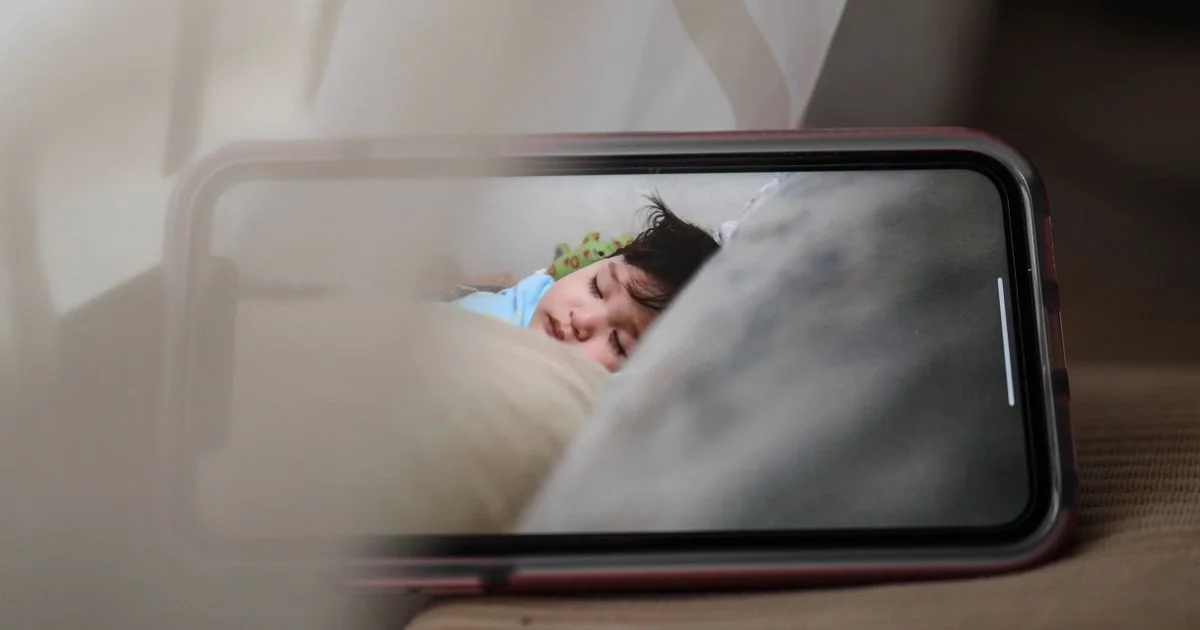
A smart baby monitor is the shortest-lived connected device most households will ever buy. A smart lock stays on the door for a decade and a smart speaker outlasts two phones, but the camera over the crib does its real job for somewhere around a year and a half. That single fact changes how an affordable smart baby monitor should be priced, because a short life makes every recurring charge and every replaceable part count for far more than the number on the box.
This is an independent editorial comparison. We are not affiliated with any brand mentioned, and no brand reviewed or approved this article. It is general consumer information about product costs, not medical or child-safety advice, and it draws on published guidance from the American Academy of Pediatrics. Questions about your own baby’s health or sleep belong with your pediatrician.
What an affordable smart baby monitor actually costs to own
The purchase is the part everyone compares. It is rarely the part that decides the total. A connected monitor has four separate cost lines, and only one of them appears on the shelf tag.
- The hardware. Camera, mount, power supply, and whatever sensor the system uses to watch breathing or movement.
- The plan. An optional annual subscription that unlocks history, extra viewers and longer video playback on some systems.
- The consumable. The fabric part that touches the baby, which wears, washes and is sized to a growing child.
- The clock. The months over which you actually use the thing, which is shorter than for any other connected device in the house.
Divide by that last line and the arithmetic looks different from a laptop or a television. Eighteen months of use is a short window over which to spread a premium purchase, and it is the reason a mid-tier camera with a long useful life in a hallway is a better buy than a top-tier one that will be boxed up before its second birthday.
What you get with no subscription at all
This is the section the marketing does not lead with, and it is the single most useful thing a value-minded parent can read before buying.
Owlet’s own Dream Sock product page states plainly that “No subscription is required” for core functionality, and that its paid tier is “an optional paid upgrade”. The live readings and the historical data in the app come with the hardware.
Nanit publishes an equally clear breakdown. With no paid Insights plan at all, its own plan guide lists sensor-free Breathing Motion Monitoring with compatible sleepwear, two-way audio, the nightlight and nature sounds, real-time sound and motion notifications, temperature and humidity monitoring, the Care Log, split-screen viewing for more than one child, and up to two users on the account.
Read those two pages next to each other and a pattern appears. On both systems the feature parents buy the monitor for, the one that watches the baby breathe, is included. What the annual plan sells is memory: longer sleep-analysis history, continuous video playback going back days rather than hours, more stored clips, and more people allowed to watch at once. That is a genuine product, and for a household with grandparents in another state it may be worth every cent. It is not the safety feature, and the pricing pages do not pretend otherwise. It is the same split we found on wrist and finger wearables, where the sensor is sold once and the history is rented.
Where a smart baby monitor under $100 usually lands
A smart baby monitor under $100 is almost always an audio or audio-and-video unit on a closed radio link, or a Wi-Fi camera with no wearable sensor at all. That is a real product category rather than a compromised one, and it is worth being precise about what the money buys and what it skips.
- It skips the wearable. No sock, no band, no breathing-motion tracking, and therefore no sized consumable to re-buy.
- It usually skips the plan. With nothing to store, there is nothing to subscribe to.
- It rarely skips the thing you use most. Hearing the room and seeing the room are the functions parents reach for at three in the morning, and both are cheap to build.
- It may skip the app. A dedicated parent unit needs no phone, no account and no home network, which removes a whole class of running cost and a whole class of failure.
The honest trade is that the cheaper tier gives up history and remote viewing, not attentiveness. If nobody in your household needs to check the room from outside the house, the expensive half of the category is solving a problem you do not have.
The consumable nobody prices: the sock and the band
Every system that watches breathing does it through something the baby wears, and that something is a garment. Garments wear out, and these ones are sized.
Owlet’s Dream Sock ships with “4 Fabric Socks (fits babies 1-18 months, 6-30 lbs)” in “two sizes (Size 1 and Size 2) with right and left versions”, and the company sells replacement sets separately; its own sock shop describes a set as “2 Size 1 Newborn socks and 2 Size 2 Infant socks” fitting babies from 5 to 30 pounds. Nanit’s Breathing Band comes in small, medium and large, is sold as a single band or a three-pack, and is described on its own product page as “100% cotton, washable”.
Cotton that is washed several times a week for a year does not last a year. Neither does a sock that starts at newborn size on a child who may grow from six pounds to thirty inside the range that sock is sold for. Budget for at least one replacement set, and price the three-pack against the single band before you buy the first one, because the per-item cost of the pack is the number that governs the second year of ownership rather than the first.

The eighteen-month question: is smart baby monitor worth it
Asked over the real life of the product rather than over a launch weekend, is smart baby monitor worth it turns into arithmetic about months rather than a debate about features. Take the hardware, add one replacement set of the wearable, add a year of whatever plan you decide you want, and divide by the number of months you will actually use it. That figure is the only one worth comparing between two systems.
It is also where the American Academy of Pediatrics deserves a hearing, because the AAP’s published guidance is blunt about what a monitor does not do. On home apnea monitors it states that they “give little or no protection from SIDS” and that “Research has not shown a clear link between apnea and SIDS.” It goes further on the human cost: “Home apnea monitors cause many false alarms. The noise can make parents worry too much and lose sleep,” and parents “may actually feel more fear and anxiety if they often use medical equipment to check on their healthy baby.”
The AAP’s own list of what does help is free: place the baby on their back, use a firm crib mattress, and keep pillows, blankets and stuffed animals out of the crib. It reserves monitors for the uncommon cases where a clinician has asked for one, such as a baby on home oxygen or with serious breathing problems. None of that makes a consumer monitor a bad purchase. It does mean that the thing you are buying is convenience and reassurance, and that it should be priced as convenience rather than as insurance.
What smart baby monitor deals 2026 actually discount
Seasonal offers on this category are worth reading carefully, because smart baby monitor deals 2026 tend to discount the part that was already going to be cheap. Bundles usually pair the camera with a first year of the plan or with a stand, and the plan renews at full rate afterwards on a product you may have stopped using.
| Tier | What you actually get | The recurring cost | Where the value sits |
|---|---|---|---|
| Entry | Audio or video on a dedicated parent unit, no account, no wearable | None | Highest, if nobody needs to watch from outside the house |
| Mid-range | Wi-Fi camera and app, real-time alerts, no breathing sensor | Optional plan for history and extra viewers | Good, provided you decline the plan and test that before buying |
| Premium | Camera plus a worn sensor for breathing motion, full app | Sized fabric consumable, plus an optional plan | Depends entirely on whether you value stored history |
| Bundle | Premium hardware with a first year of the plan included | Renews at full rate, often after the product’s useful life | Lowest, unless you set a calendar reminder on the renewal date |
Where the money is genuinely wasted
Three purchases in this category reliably disappoint, and none of them is the cheap camera.
- A plan bought before the first month is over. Both major systems run their safety-adjacent features without one. Live with the free tier through a full sleep regression, then decide whether you miss the history.
- A second camera bought for a second child who is not born yet. The model will have changed, the app will have changed, and the sale you caught will not apply to the accessory you eventually need.
- Buying up a tier for a feature the pediatrician did not ask for. The AAP is explicit that monitors have a narrow clinical role. Paying premium money for reassurance is a legitimate choice; paying it in the belief that it is a medical safeguard is not the same decision.
The genuine false economy runs the other way in exactly one place. A monitor with no account, no cloud and no app also has no path to a software update, so if you want the thing to keep working as sold for a second child, the mid-tier connected unit is the one that can be patched.
Frequently Asked Questions
The questions parents ask about this category are almost all really questions about recurring cost. Here are the four that come up most.
Does the breathing feature stop working if I cancel the plan?
On the two systems whose pages are quoted above, no. Owlet states that no subscription is required for core functionality, and Nanit lists breathing motion monitoring among the features available with no paid plan. Check the page for the specific model you are buying before you assume it, since the terms are set per product rather than per brand.
How long will I actually use it?
Owlet’s own fit range for the Dream Sock covers babies from one to eighteen months. Plenty of households keep a plain video camera running for years after the wearable is retired, but the sensor-driven half of the product has a stated window, and that window is the right denominator for any cost comparison.
Is a cheaper monitor less safe?
Not on the evidence pediatricians publish. The AAP’s position is that home monitors give little or no protection from SIDS and that the measures that help are free ones: back sleeping, a firm mattress and a bare crib. A cheaper monitor gives up history and remote access, which are conveniences.
Are the replacement socks and bands worth buying in packs?
Usually, if you are committed to the system. Both companies sell multi-item sets, and the fabric is washed constantly and outgrown on a schedule. The pack price divided across its items is the figure to compare, not the single-unit price.
Bottom line
Buy the hardware tier that matches how you will actually watch the room, decline the plan until you have missed it, and price the wearable as a garment you will replace rather than as an accessory you bought once. Over eighteen months, those three decisions move more money than choosing between any two cameras on the shelf.


