

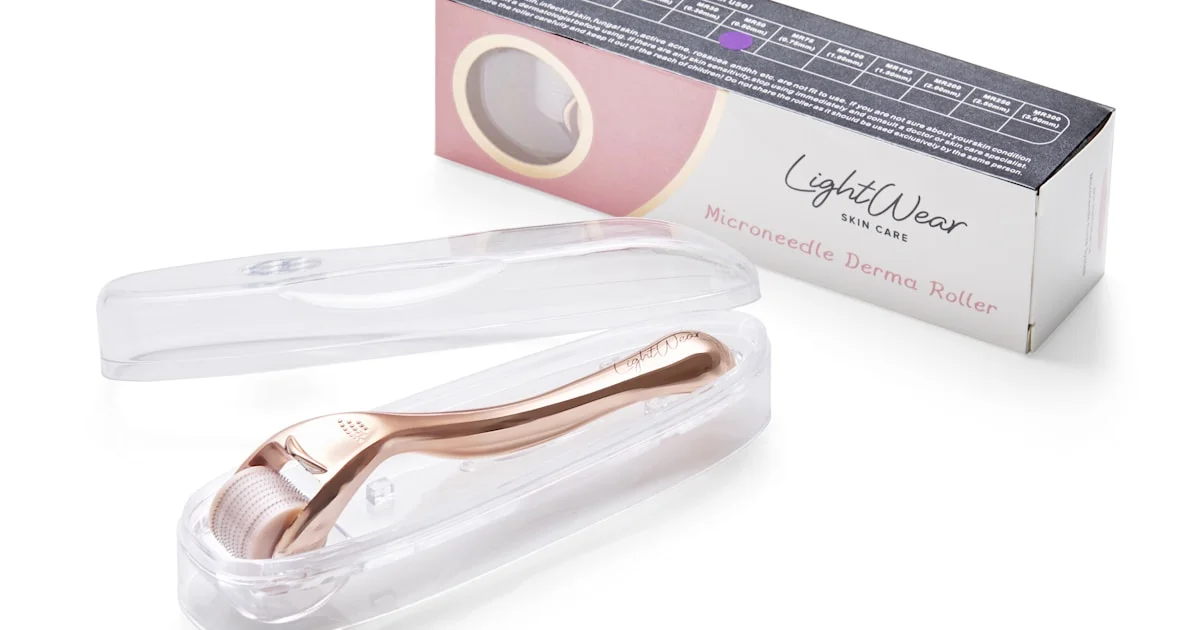
A dull, bumpy skin texture is one of the hardest things to fix with skincare products alone — creams sit on top of the problem instead of addressing it. The best derma roller for skin texture works differently: it creates thousands of microscopic punctures that trigger your skin’s own repair process, which is why dermatologists have used the underlying technique (professionally called microneedling) for years before at-home versions became popular. This guide breaks down what actually matters when picking one, what needle depth is safe to use without supervision, and how to avoid the mistakes that turn a good tool into a skin problem.
Key Takeaways
- Needle depths of 0.2mm to 0.5mm are considered safe for at-home use; anything at 0.75mm or beyond should be left to a licensed professional.
- Titanium needles hold a sharp point longer than stainless steel and are less likely to bend or tear skin on repeat use.
- Sterilizing the roller in 70% isopropyl alcohol before and after every session is non-negotiable — skipping it is the leading cause of at-home microneedling infections.
- Rolling more often does not speed up results. At 0.5mm depth, skin needs 2 to 4 weeks to fully heal between sessions.
- A derma roller helps with texture, fine lines, and product absorption, but it will not fix active acne, deep scarring, or pigmentation on its own.
What Makes the Best Derma Roller for Skin Texture
The short answer: the best derma roller for skin texture is the shortest needle length that still gets results for your specific concern, paired with a build quality that won’t bend, rust, or harbor bacteria between uses. Most people chasing smoother, more even-looking skin do not need the longest needles on the shelf — they need consistency, correct depth, and a roller that survives repeated sterilization without degrading.
Texture problems usually come from a mix of sun damage, enlarged pores, and slowed-down cell turnover as skin ages. Microneedling addresses all three by prompting the skin to produce new collagen and elastin in the punctured areas, which is also why results build gradually over weeks rather than appearing overnight.
How Derma Rollers Actually Work
A derma roller is a handheld cylinder covered in fine needles, mounted on a handle so you can roll it evenly across the skin. Each pass creates hundreds of controlled micro-injuries. Your skin reads that as damage and responds by ramping up collagen and elastin production to repair it — the same wound-healing response your body uses for any small cut, just organized into a pattern fine enough to smooth texture instead of leaving a mark.
That controlled-injury model is also why the tool works better as a texture and absorption booster than as a cure for anything serious. It thins the outermost layer of skin just enough to let serums penetrate more effectively, which is why many people apply hyaluronic acid or a gentle peptide serum immediately after rolling.
Needle Length: What’s Safe at Home vs. Professional Only
Needle length is the single most important spec on a derma roller, and it is also the one most commonly misrepresented on generic marketplace listings. Dermatologists draw a fairly consistent line: anything from 0.2mm up to 0.5mm is reasonable for home use on healthy skin, and anything longer moves into territory that should involve a trained provider.
Derma Roller Size Guide Comparison
- 0.2mm–0.3mm: Surface-level only. Best for beginners, sensitive skin, and boosting how well serums absorb. Minimal downtime.
- 0.5mm: Reaches slightly deeper and is where most people start seeing a texture difference. Appropriate only for experienced users with no active breakouts, sessions spaced 2–4 weeks apart.
- 0.75mm and above: Considered borderline clinical territory. Dermatologists generally recommend this range only in a professional setting.
- 1.0mm or longer: Should not be used at home under any circumstances — this depth reaches into the dermis and carries real infection and scarring risk without medical supervision.
If a listing doesn’t clearly state the needle length in millimeters, that’s a reason to skip it — it usually means the seller sourced a generic roller without verifying the spec themselves.
What to Look for When Choosing a Derma Roller
Beyond needle length, a handful of build-quality details separate a roller that lasts from one that becomes a liability after a few uses.
- Needle material: Titanium alloy needles hold their point longer and resist bending better than plain stainless steel, which matters because a bent or dull needle tears skin instead of puncturing it cleanly.
- Needle count: Most facial rollers carry 192 to 540 needles. Higher counts at a shallow depth spread the micro-injuries more evenly; lower counts at a deeper depth are used for more targeted areas.
- Storage case: A roller that comes with a hard case you can also use to soak it in alcohol is worth more than one that ships loose in plastic wrap.
- Handle grip: A textured, non-slip handle keeps rolling pressure even, since uneven pressure is one of the more common causes of irritation.
Reading a Microneedling Roller Review the Right Way
A useful microneedling roller review tells you three things a product photo cannot: whether the needle length printed on the box matches what buyers actually measured, how the roller held up after repeated alcohol soaks, and whether the company includes real sterilization instructions rather than a vague “clean before use” line. Reviews that focus only on before-and-after photos without addressing needle quality or hygiene are the least useful ones to trust, since skin changes for a lot of reasons besides the roller itself.
How to Use a Derma Roller Safely at Home
Technique matters as much as the tool. Going too fast, pressing too hard, or skipping sterilization steps is how a safe product causes a bad outcome.
- Soak the roller in 70% isopropyl alcohol for 10 minutes before your first use of the session.
- Cleanse your face and let it dry completely — rolling over damp or oily skin increases irritation.
- Roll gently in vertical, horizontal, and diagonal directions across each area, 4–5 times per direction, without pressing down hard.
- Avoid active breakouts, open cuts, sunburned skin, or areas with eczema flare-ups.
- Apply a gentle, fragrance-free serum immediately after — this is when your skin absorbs product most effectively.
- Apply SPF 30 or higher the next morning without exception, since freshly rolled skin is more sensitive to sun damage.
- Soak the roller again in alcohol for 10 minutes after use, then air-dry it fully before storing.
How We’d Rank an At-Home Derma Roller
When judging an at home derma roller ranked against competitors, needle length accuracy and sterilization design should outweigh price or needle count. A $15 roller with an honestly labeled 0.3mm needle and a real soak-friendly case beats a $30 roller with vague specs and a flimsy cap, because the safety details are what actually prevent skin damage.

Derma Roller vs Other At-Home Skin Texture Tools
A derma roller is not the only option for improving texture at home, and it is not always the right first step. Here is how it stacks up against two other common tools.
| Tool | Best For | Trade-Off |
|---|---|---|
| Derma roller (0.2–0.5mm) | Overall texture, fine lines, product absorption | Requires strict hygiene and healing time between sessions |
| Chemical exfoliant (AHA/BHA) | Surface dullness, mild breakouts, quick results | Can irritate sensitive skin if overused; no collagen stimulation |
| LED light therapy mask | Gentle, low-risk maintenance between deeper treatments | Slower, more subtle results; higher upfront cost |
Many people get the best results by rotating: a derma roller every 2–4 weeks, gentle chemical exfoliation on off weeks, and LED sessions layered in without overlapping either.
Frequently Asked Questions
A few questions come up constantly from first-time buyers, so here are straight answers to the most common ones.
How often should I use a derma roller?
At a 0.5mm depth, once every 2 to 4 weeks is the standard recommendation. Shorter needles in the 0.2–0.3mm range can sometimes be used slightly more often since they only affect the surface layer, but daily use is never recommended at any depth.
Can a derma roller cause breakouts?
It can, usually from rolling over active acne, using an unsterilized roller, or applying heavy, pore-clogging products right after a session. Sticking to a clean roller and a light, non-comedogenic serum afterward avoids most of this.
Is a derma roller safe for darker skin tones?
Yes, but the risk of post-inflammatory hyperpigmentation is higher, so starting at the shortest needle length and spacing sessions further apart is worth the extra patience.
Do derma rollers actually work, or is it a placebo?
The underlying mechanism — controlled micro-injury triggering collagen production — is the same principle professional microneedling uses, just at a gentler depth. Results are real but gradual, typically visible after 6 to 8 weeks of consistent, correctly spaced use.
Conclusion
The right derma roller comes down to an honest needle length, quality build materials, and a routine that respects your skin’s healing time. Get those three things right and a $15–$25 tool can meaningfully improve texture over a couple of months — no professional appointment required.


