

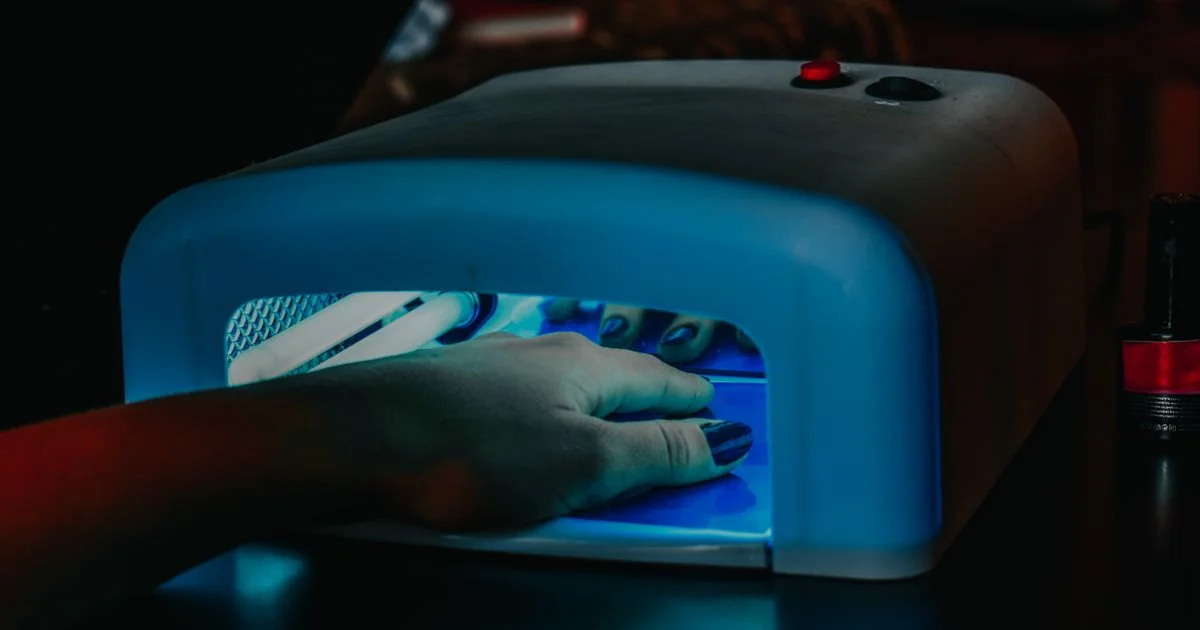
Getting a salon-quality gel manicure at home used to mean guessing whether your polish would actually cure right. The best UV nail lamp for gel manicure use is the one that matches what your gel brand actually requires, cures every coat evenly, and does not leave your fingertips warm and pink afterward. This guide walks through what separates a genuinely good nail lamp from one that only looks the same in a product photo, plus how to avoid the two most common buying mistakes: picking a lamp your gel is not rated for, and trusting a wattage number that does not mean what it sounds like it means.
Key Takeaways
- LED nail lamps generally cure gel polish in 30 to 60 seconds per coat, while UV lamps can take up to 3 minutes for the same result.
- Wattage is not a universal quality score — a 36W LED lamp and a 96W LED lamp can both fully cure gel if the wavelength matches your polish.
- Always check the label on your gel polish bottle: some brands are UV-only, some are LED-only, and many newer formulas cure under both.
- A lamp with multiple timer settings (commonly 10, 30, 60, and 90 seconds) fits a wider range of gel thicknesses and brands than a single fixed cycle.
- Portable, rechargeable lamps are convenient for travel and touch-ups but usually cure more slowly than a plug-in salon-style unit.
What Makes the Best UV Nail Lamp for Gel Manicure Results at Home
The short answer: for most people doing their own gel manicures, a 48W LED lamp with an automatic motion sensor and at least two timer options covers the widest range of gel polish brands without forcing you to sit through long cure cycles. The harder part is understanding why wattage alone will not tell you that, and why the “best” lamp really depends on the gel polish already sitting in your drawer.
Start With Your Gel Polish, Not the Lamp
Before comparing lamps, check what your gel polish brand actually calls for. Buying the lamp first and hoping your polish cures under it is the single most common reason people end up disappointed with an otherwise well-reviewed unit.
LED vs. UV: What Actually Cures Your Gel
LED and UV lamps both cure gel polish using light, but they work on different parts of the light spectrum, and gel formulas are chemically tuned to react to one or the other — sometimes both. Traditional UV lamps run on a 36-watt professional standard, built from several individual bulbs rated at 9 watts or less, and those bulbs need replacing every few months as they dim with use. A LED nail lamp skips that maintenance entirely: LED bulbs last roughly 50 times longer than UV bulbs, run cooler, and use less electricity to do the same job.
The catch is compatibility. Some gel polish brands are formulated for UV curing only, some for LED only, and a growing number cure under either. Before you buy a lamp, check your gel polish bottle or the brand’s website for its light requirement — a mismatch means your manicure will still be tacky and soft when the timer goes off, no matter how expensive the lamp was.
Wattage and Curing Time, Explained
Wattage numbers on nail lamp listings are one of the most misunderstood specs in the category. A UV lamp advertised at 36 watts is describing the combined output of several smaller 9-watt bulbs, not one powerful light source. LED lamps do not follow that same rule at all — you will see 36W, 48W, and 96W LED lamps on the market side by side, and a higher wattage mainly means faster, more even curing across all ten fingers at once, not a stronger or objectively “better” light.
Cure time is the number that actually matters day to day. LED lamps typically cure a coat of gel polish in 30 to 60 seconds, and most models offer timer settings between 10 and 90 seconds so you can match the cycle to the coat you just applied — a thin top coat needs less time than a pigmented color coat. UV lamps run slower across the board, often needing up to 3 minutes per coat, which adds up once you count base coat, two color coats, and a top coat.
Is a High-Wattage Lamp Safe for Your Skin?

Higher-wattage LED lamps are not inherently unsafe, but they are not something to use carelessly either. The general safety guidance from nail suppliers is straightforward: follow the lamp’s instructions, apply gel polish in thin, even layers, and do not exceed the recommended cure time for your coat thickness. Thick or uneven gel application is the most common cause of overheating and the brief “heat spike” some people feel partway through a cure cycle — not the wattage number itself.
If you have sensitive skin or a history of reacting to UV exposure, it is worth applying a broad-spectrum sunscreen to the backs of your hands before curing, the same precaution often recommended for professional salon visits. It is a small extra step that removes most of the concern for occasional at-home use.
Portable UV Lamp for Nails: Worth It for Travel?
A portable UV lamp for nails trades some curing power for size. Most run on rechargeable batteries or USB power instead of a wall plug, and many fold flat or ship with a hard case that fits in a suitcase or gym bag. That tradeoff makes sense if you are doing touch-ups, fixing a single chipped nail, or maintaining a manicure while traveling. It makes less sense as your only lamp if you regularly do full ten-finger sets at home, since battery-powered units usually run at lower wattage and need longer cycles to fully cure a complete set.
What to Look For Before You Buy
- Compatibility with your specific gel polish brand — UV, LED, or dual-cure.
- At least two timer settings, ideally 10/30/60/90 seconds, for different coat types.
- An automatic sensor so the lamp turns on when your hand enters, rather than a manual button you have to hold.
- Enough interior width to fit all five fingers flat without cramming your hand at an angle.
- A vented housing or small fan, which reduces the heat buildup that causes the “hot flash” sensation during longer cures.
Nail Lamp Types Compared
| Lamp type | Best for | Trade-off |
|---|---|---|
| Plug-in LED (48W+) | Full manicures at home, frequent use | Least portable, needs a dedicated outlet |
| Plug-in UV (36W) | Older or UV-only gel formulas | Slower cure times, bulbs need periodic replacement |
| Portable/rechargeable LED | Travel, touch-ups, single-nail fixes | Lower wattage, longer cycles for a full set |
| Dual UV/LED lamp | Households using more than one gel brand | Higher price, bulkier housing |
Doing a Gel Manicure at Home, Step by Step
- Push back cuticles and lightly buff the nail surface so the base coat has something to grip.
- Apply a thin base coat and cure it for the time listed in your gel brand’s instructions.
- Apply one thin coat of color, wiping excess polish from the brush before application to avoid pooling near the cuticle.
- Cure the color coat, then repeat with a second thin coat if the color still looks streaky.
- Finish with a thin top coat, cure again, and wipe away any tacky residue with rubbing alcohol.
Frequently Asked Questions
Here are answers to the questions people ask most often before buying their first nail lamp.
Can I use any nail lamp with any gel polish brand?
No. Always check the packaging or brand website first — some gel formulas are UV-only, some are LED-only, and mismatching the two is the most common reason a “cured” manicure still feels soft to the touch.
Do I need a 48W lamp, or is 36W enough?
Either can fully cure gel polish as long as the wavelength matches your brand. Higher wattage mainly speeds up the cure and evens it out across all fingers at once — it is a convenience upgrade, not a strict requirement.
How long do LED nail lamp bulbs actually last?
LED bulbs are rated for roughly 50 times the lifespan of the bulbs in a traditional UV lamp, which is why most LED lamps do not need any bulb replacement over years of regular use.
Is it safe to use a nail lamp every two weeks?
Occasional home use, following the lamp’s instructions and applying polish in thin layers, is considered low-risk. If you have particularly sensitive skin, applying sunscreen to the backs of your hands before curing is a simple extra precaution.
Conclusion
The best UV nail lamp for gel manicure use is not the one with the biggest wattage number on the box — it is the one that matches your gel brand, offers enough timer flexibility for different coat types, and fits your hand comfortably. Get those three things right, and an affordable lamp will consistently outperform a pricier one that simply does not match your polish.


