

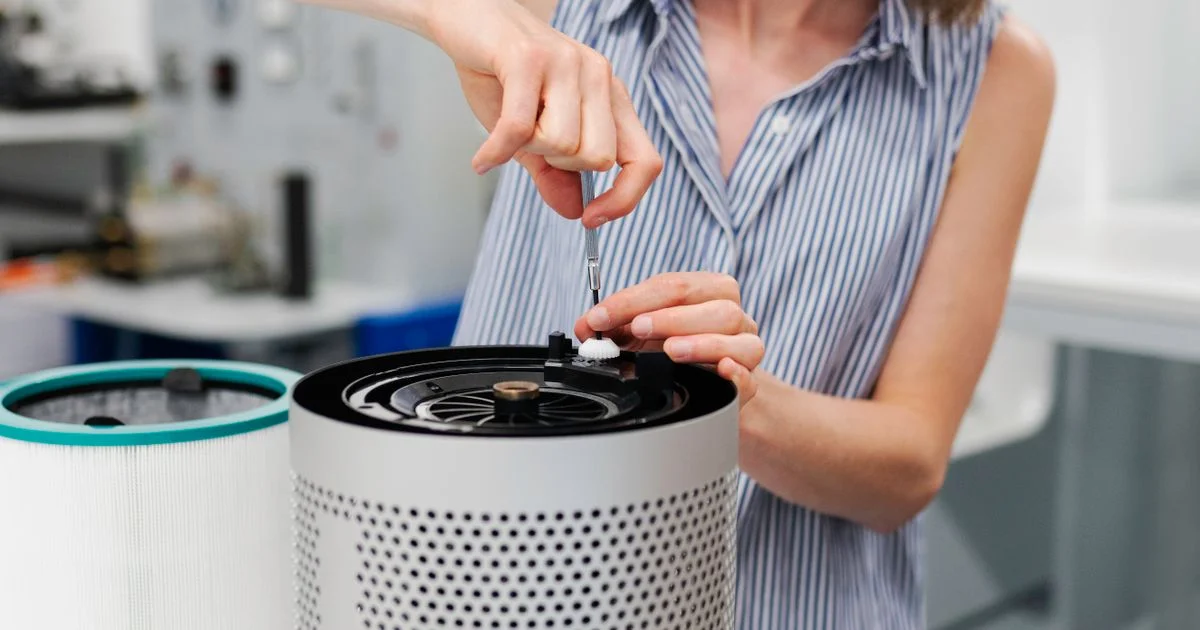
The best air purifier for allergies doesn’t need to be the most expensive one on the shelf — it needs a True HEPA filter, a CADR rating that matches your room size, and a fan that will actually stay on. This guide breaks down what those numbers mean and compares four real, currently sold purifiers so you can match one to your space.
Key Takeaways
- Look for “True HEPA” or “H13 HEPA” specifically — generic “HEPA-type” filters don’t meet the same particle-capture standard.
- CADR (Clean Air Delivery Rate) tells you how fast a purifier actually cleans air, not just how big its filter is.
- Match the purifier’s coverage rating to your room size, or slightly larger, for the best real-world results.
- Activated carbon layers help with odors and some VOCs, but the HEPA layer is what matters most for allergens.
- A purifier only helps if it runs continuously — cycling it on and off defeats most of the benefit.
What Actually Helps With Allergies
The short answer: the best air purifier for allergies combines a True HEPA filter (captures at least 99.97% of particles down to 0.3 microns) with a CADR rating high enough for your room, run continuously rather than occasionally. Dust, pollen, and pet dander are all within the particle size range HEPA filters are built to catch — the variable that actually matters is whether the unit can cycle enough air per hour to keep up.
Marketing terms like “medical grade” or “hospital grade” aren’t regulated the same way “True HEPA” is, so they’re worth treating skeptically. The filter type and CADR number tell you far more than the label on the box.
HEPA Air Purifier Bedroom Setups: What “True HEPA” Actually Means
A hepa air purifier bedroom setup is one of the highest-value places to run a purifier, since you spend roughly a third of your day there. The Levoit Vital 200S-P is built specifically around this use case — a 3-stage system (pre-filter, HEPA, activated carbon) rated for rooms up to 388 square feet, with a CADR of 250. In hands-on testing, one reviewer noted their morning eye irritation “completely disappeared” after running it overnight.
“True HEPA” is a specific standard: the filter must remove at least 99.97% of particles at 0.3 microns, the hardest particle size to trap. Filters labeled only “HEPA-type” or “HEPA-like” are not held to that standard and can perform meaningfully worse.
Air Purifier for Pet Dander: CADR Numbers That Matter
Pet dander is smaller and lighter than dust, so it stays airborne longer — which makes CADR especially relevant for an air purifier for pet dander. The Levoit Core 400S-P is rated for a 231 CFM smoke/dust/pollen CADR across a 400-square-foot space, and testers reported a “noticeable improvement in dust, pet hair and everyday air quality” after regular use.
For pet owners specifically, activated carbon matters more than it does for pollen-only allergies, since it helps with the odor component that pure HEPA filtration doesn’t touch.
Allergy Relief Air Purifier: Room Size and Coverage
Coverage ratings are usually calculated for a certain number of air changes per hour, so an allergy relief air purifier rated for exactly your room size may still be working harder than one rated for more space than you need. The Clorox Medium Room True HEPA purifier is rated up to 1,000 square feet with a True HEPA and activated carbon combination, making it a reasonable pick for an open living area rather than a single bedroom. For genuinely large or open-plan spaces, the Medify MA-112 is rated up to 4,455 square feet with a CADR over 600 for dust — testers reported reduced allergy symptoms “especially at night” after switching to it.
Four Real Options Compared
Each of these has been reviewed by independent testers rather than judged on spec sheets alone, which matters because a CADR number on a box doesn’t always translate to how a unit performs in a real room with real airflow obstacles like furniture and doorways.
| Purifier | Best For | Trade-off |
|---|---|---|
| Levoit Core 400S-P | General living spaces with pets | Smart app features add complexity some users skip |
| Levoit Vital 200S-P | Bedroom use, overnight allergy relief | Smaller coverage area than whole-floor purifiers |
| Clorox Medium Room True HEPA | Budget-friendly coverage for larger rooms | Fewer smart features than app-connected models |
| Medify MA-112 | Large or open-plan spaces | Bigger unit, higher operating noise on top speed |
Placement and Maintenance Tips
Buying the right unit only solves half the problem — where you put it and how often you maintain it determine whether you actually get the CADR performance the box promises.
- Keep at least a couple of feet of clearance on all sides so air can circulate freely in and out of the unit.
- Run it continuously on a lower speed rather than only on high when symptoms flare — steady filtration outperforms occasional blasts.
- Replace HEPA filters on the manufacturer’s schedule, typically every 6–12 months depending on use and air quality.
- Keep doors and windows closed while it’s running so outdoor allergens aren’t constantly reintroduced.

How to Pick the Right Size
- Measure your room’s square footage rather than estimating.
- Choose a purifier rated for that square footage or slightly above it, not below.
- Check the CADR rating specifically for dust and pollen, since those numbers can differ from the smoke CADR.
- Confirm the filter is labeled True HEPA or H13 HEPA, not a generic “HEPA-type” filter.
- Factor in noise level if the unit will run in a bedroom overnight.
Frequently Asked Questions
These are the questions that come up most when people are shopping for allergy relief specifically.
How long does it take an air purifier to noticeably help with allergies?
Many people notice a difference within a few days of continuous use, though it depends on the size of the space and how well-sealed the room is. Consistency matters more than any single setting.
Do I need a separate purifier for pet dander versus pollen?
No — a True HEPA filter captures both, since pet dander and pollen fall within the particle size range HEPA is designed to catch. An added activated carbon layer helps more with pet odor specifically, not the dander itself.
Is a bigger CADR number always better?
Not necessarily — it should match your room size. An oversized purifier for a small bedroom isn’t harmful, but it’s an unnecessary expense and can be louder than needed on its lower settings.
Can an air purifier replace regular cleaning for allergy control?
No. Air purifiers only address airborne particles — dust on surfaces, in carpets, and in bedding still needs regular vacuuming and washing. The two approaches work best together.
Should I run my air purifier year-round or only during allergy season?
Year-round use gets more value out of the unit, since indoor allergens like dust and pet dander don’t disappear outside of pollen season. Many households do increase the fan speed or run time during the weeks when local pollen counts are highest.
Conclusion
The right air purifier for allergies comes down to matching a True HEPA filter and an honest CADR rating to your actual room size, then letting it run continuously. Any of the four options compared here can meaningfully cut down on airborne dust, pollen, and pet dander — the right pick just depends on the size of the space you’re trying to clear.


1 Comment
Comments are closed.