

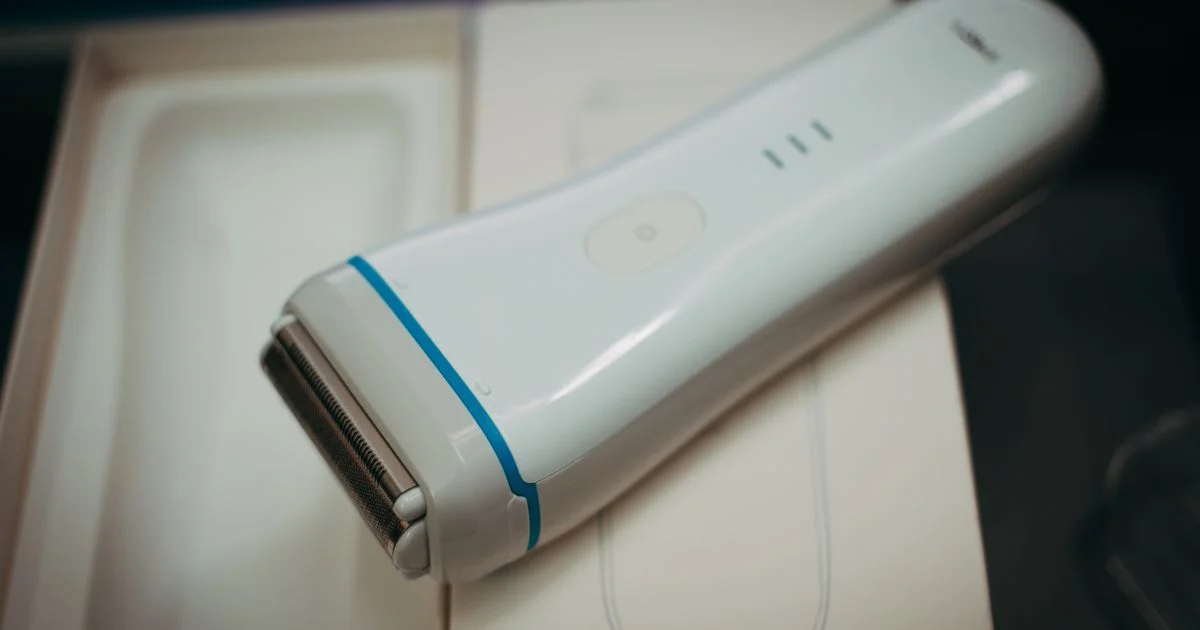
Electric razors for women sit in an odd part of the beauty aisle: the cheap ones and the expensive ones look almost identical, and the marketing on both promises the same smooth, painless result. What actually separates them is the cutting head, whether the body is genuinely sealed for water, and how much the replacement parts cost over the years you own it. Picking the best electric razor for women 2026 has more to do with those three things than with any feature on the front of the box.
Key Takeaways
- Foil heads give the closest shave on flat areas like legs; rotary heads flex to curves but tend to cut slightly less close.
- “Water resistant” and “sealed for wet use” are different claims, and only one of them means you can take it into the shower.
- Replacement foils and cutters are the real running cost — foil heads typically want replacing every 12 to 18 months, rotary heads every 18 to 24.
- An electric razor will not match a fresh blade for closeness. It trades that for speed, no cuts and no shaving cream.
- Pop-up trimmers, bikini combs and multiple heads add cost and are only worth it if you will use more than one of them.
What the best electric razor for women 2026 actually costs you
The short answer: pay for a genuinely waterproof body and a head type that matches where you shave most, then budget for replacement foils rather than assuming the purchase price is the whole price. A mid-range shaver with cheap, easy-to-find replacement parts will cost less over five years than a premium one whose heads are hard to source.
This is the part the spec sheet never frames honestly. A shaver is a razor plus a consumable, the same as a cartridge handle is. The difference is that the consumable lasts a year or two instead of a couple of weeks.
Foil or rotary: the one spec that changes the shave
A foil shaver runs oscillating blades behind a thin perforated screen. Hair enters the holes and is cut against the screen, which is why foils shave close and why they suit flatter areas such as the legs and underarms. Foil designs are also the usual recommendation for sensitive skin, and hypoallergenic foil coatings exist specifically to reduce bumps and redness.
A rotary shaver uses spinning cutters in heads that flex independently to follow contours. That flexing is the advantage around ankles, knees and other awkward curves, and the cost is a shave that is typically a fraction less close than a good foil.
For most people shaving legs, a foil head is the more sensible default. If your complaint is nicks and missed patches around bone, rotary is worth the look.
Wet, dry, and the claim that is not what it sounds like
Wet use — shaving in the shower with gel or foam — is gentler on skin and is the single feature most worth having. The catch is that a shaver must be genuinely sealed for wet use, not merely splash-resistant enough to rinse under the tap. Look for an actual ingress rating; IPX7 appears on properly sealed models, and it means the body can be submerged rather than just wiped.
A fully rinseable, detachable head is the related feature that quietly matters, because trapped hair and skin residue are what dull a shaver’s performance between replacements.
Features that cost a lot and change little
- Bundled attachment kits. Bikini combs, pop-up trimmers and interchangeable heads are useful if you use them. Most people use exactly one head and pay for four.
- Charging stands and cleaning docks. Cosmetic on a body shaver. A rinse under the tap does the same job.
- Battery percentage displays. Pleasant. A three-light indicator tells you the same thing.
- Extreme runtime claims. A shaver only needs to cover several sessions between charges. Beyond that the number is for the box.
- “Painless” branding. A shaver cuts hair at the surface, so it does not pull the way an epilator does. That is a property of the category, not of the expensive models.
Two features that do earn their keep: a quick-charge mode that gives you one shave from a short top-up, and the ability to run plugged in, which turns a dead battery into an inconvenience rather than a ruined morning.
Where buying cheap genuinely costs you later
The failure mode with a cheap shaver is rarely dramatic. It is that the head dulls and nobody notices, because dulling is gradual. The signs are specific: more irritation or razor burn from repeated passes, hairs being tugged rather than cut, uneven results with missed patches, and visible wear or a change in the sound of the motor.
Running a dull head is not thrift. It means more passes over the same skin, more micro-cuts, longer sessions, and more strain on the motor. The sensible rule is to replace on performance rather than on the calendar, using the 12-to-18-month foil guideline as a prompt to start paying attention. Heavy users often reach that point closer to 9 to 12 months.
Before you buy, check that the replacement head for that specific model is actually sold, and that it is stocked somewhere you can reorder from. A shaver with discontinued foils is a disposable razor with a battery.
Electric shaver for legs compared with a manual razor
Any honest electric shaver for legs comparison has to admit the trade. A fresh blade shaves closer than any foil. What the electric buys you is speed, dry shaving when you have no time, no cuts, and no cream. What it costs you is that closeness, plus a higher upfront price you recover slowly.

The arithmetic works out differently depending on how often you shave. Cartridge refills are a small, frequent cost that never stops. Shaver foils are a larger, rare cost. If you shave several times a week, the electric usually wins over a few years. If you shave occasionally in summer, a cartridge handle may simply be the cheaper answer, and there is no shame in that being the conclusion.
| Option | Best for | The trade-off |
|---|---|---|
| Foil electric shaver | Legs and underarms; sensitive skin; frequent shaving | Less close than a blade; foils need replacing on a schedule |
| Rotary electric shaver | Curves, ankles and knees; less careful technique | Slightly less close again; heads cost more, last longer |
| Manual cartridge razor | Closest result; occasional use; lowest entry cost | Nicks, needs water and cream, refills forever |
| Epilator | Longest time between sessions | It pulls hair out, which is a genuinely different experience |
Making one last: the boring habits that matter
Most of what shortens a shaver’s life is technique rather than quality.
- Do not press hard. Pressure does not cut more hair; it flattens the foil against skin and causes irritation.
- Trim long hair first. Asking a shaver to clear a few weeks of growth is what makes it tug.
- Rinse the head after every session rather than every few.
- Use the lubricant the manufacturer recommends, if it recommends one.
- Store it dry. A wet head left in a closed case is how corrosion starts.
One thing shopping cannot solve: if you get persistent irritation, recurring ingrown hairs or bumps that do not settle whatever device you use, that is worth raising with a dermatologist rather than buying a fourth razor.
Frequently Asked Questions
The questions that come up most in any ladies shaver review comment section.
Can I use a men’s electric shaver on my legs?
Mechanically, yes — a foil is a foil. Shavers marketed to women tend to have wider heads and longer handles suited to large flat areas, which makes them faster rather than fundamentally different.
Will an electric razor reduce ingrown hairs?
It can help, because cutting at the surface leaves less of a sharp angled tip than a very close blade shave. It is not a guarantee, and it varies a lot by person.
How often do I really need to replace the foil?
Use 12 to 18 months as a prompt for foils and 18 to 24 for rotary heads, then judge by how the shave feels. Tugging is the clearest signal.
Is a wet-and-dry model worth the extra?
If you shave in the shower, yes, and it is the upgrade most likely to change your routine. If you always shave dry at the sink, you are paying for a seal you will not use.
The bottom line
Choose the head type by where you actually shave, insist on a properly sealed body if you want shower use, and check the price and availability of replacement foils before you buy anything. A mid-range shaver you can keep in parts will outlast and out-value a premium one you cannot.


