

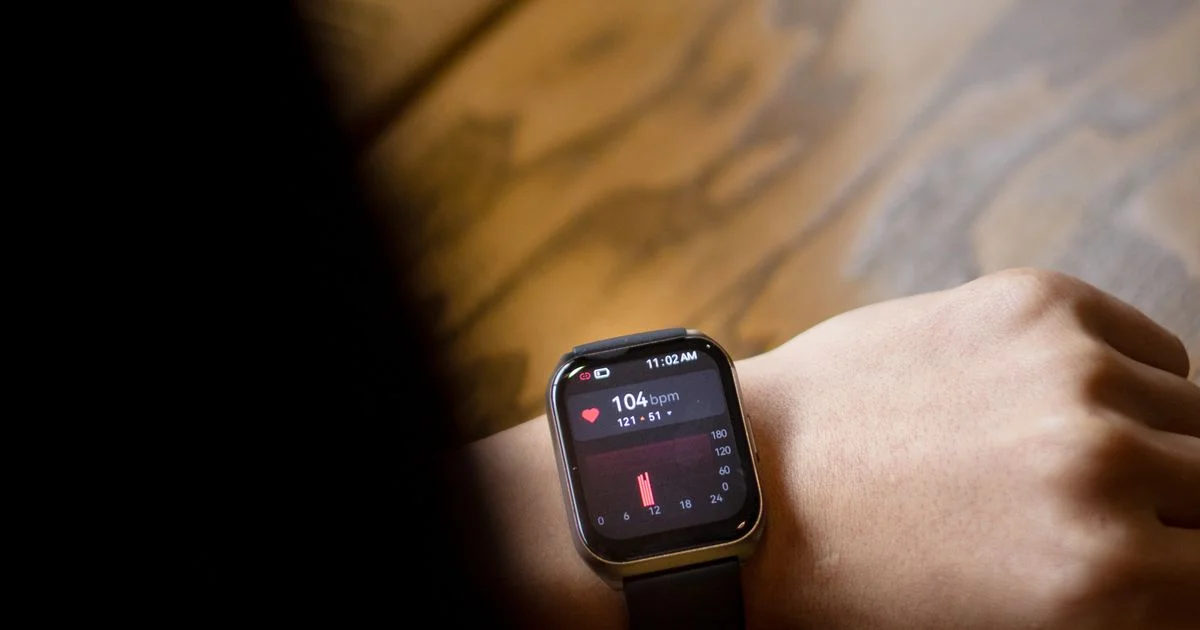
The small plastic pod that clips onto a heart rate strap will comfortably outlive several of the straps it clips to. That inversion is the whole reason is heart rate monitor worth it is a harder question than it looks: the sticker price buys a transmitter built to last years, while the part touching your skin is a textile consumable with a replacement schedule. This guide breaks the category down by what you pay once, what you pay again, and when the sensor already on your wrist is enough.
This is an independent editorial comparison. We are not affiliated with any brand mentioned, and no brand reviewed or approved this article.
What you are actually paying for
A chest monitor is two purchases wearing one box. The transmitter reads the heart’s electrical signal directly, the same class of measurement a clinical trace uses, and REI’s buying guidance describes chest straps as the most accurate consumer option and notes that electrical sensing works regardless of skin tone. That pod is solid-state and has very little to wear out.
The strap is the other half, and it is fabric with conductive electrodes woven through it. It stretches, it absorbs sweat and salt, and its electrodes gradually foul with skin oils, lotion and detergent residue. Morpheus, which sells monitors of this type, publishes a replacement schedule by usage: roughly every 6 months at four to seven sessions a week, every 9 to 12 months at two to four, and every 12 to 18 months at one or two. The company is explicit that the transmitter is built to last for years while the strap is not.
So the honest cost of ownership is one transmitter plus a strap every six to eighteen months, for as long as you keep training.
The battery question runs the opposite way to expectations
Here the cheaper design usually wins outright. REI puts active battery life for rechargeable chest and armband monitors at between 30 and 110 hours, while monitors running on a replaceable coin cell can last up to 400 hours before the battery needs changing.
Read that again in training terms. At an hour a session, a rechargeable unit wants attention somewhere between once a month and once a season, and a coin-cell unit can run for well over a year of regular use on one inexpensive battery. Rechargeable is tidier and one less thing to buy; coin cell is dramatically less frequent to think about. Paying extra for a rechargeable strap is paying for convenience, not endurance.
One small habit stretches it further. Polar’s own care instructions tell you to detach the connector and store it separately from the strap between sessions, specifically to maximize battery life — a damp strap left clipped to its pod keeps a small circuit alive.
The free option: the wrist you already own
Before spending anything, work out whether the wrist sensor in the watch or band already on your arm covers what you do. Optical wrist sensing shines light through the skin and reads the pulse from it, and REI is direct that this is the least accurate of the options, with two specific failure modes: water interferes with readings, and runners can hit cadence lock, where the sensor latches onto footfall rhythm and reports your stride rate as your heart rate.

The practical division is straightforward. For steady efforts — a walk, an easy run, a bike commute, a weights session — the wrist is generally fine, and a cheap heart rate monitor under $40 would tell you little you do not already know. For anything where intensity changes quickly, or for swimming, the wrist is where the numbers stop making sense and a strap starts paying for itself.
There is a middle option worth knowing about, because it rarely gets shelf space. An optical armband sits on the forearm or upper arm rather than the wrist; REI rates it as more accurate than a wrist-top model and less fussy than a chest strap, with better accuracy for darker skin tones than wrist sensors. It avoids cadence lock, and some versions are swim-friendly. If a chest strap is the thing putting you off, this is the tier to look at before giving up.
What you get at each tier
Feature lists climb faster than usefulness in this category, which is why heart rate monitor price USA listings can span such a wide range for what is, at the sensor, the same measurement.
- Entry-level: workout timing plus continuous, average, high and low heart rate, with up to about three target zones. For training by effort, this is the whole job.
- Mid-range: more granular zone structures — typically three to six — and reliable dual connectivity so the strap talks to a watch and a phone app at once.
- Premium: GPS, calorie estimates, sleep tracking, stride dynamics, cadence sensing and swim metrics bundled in. Genuinely useful to some athletes, and largely unopened by most buyers.
The measurement — the reason you bought it — is essentially as good at the bottom of the range as at the top, because the electrode is doing the same physics either way. What the extra money buys is the analysis wrapped around it.
| Option | Best for | What the money buys | Trade-off |
|---|---|---|---|
| Wrist sensor you already own | Steady-effort training, general awareness | Nothing — you have already paid | Least accurate; cadence lock and water problems |
| Coin-cell chest strap | Intervals and anyone who forgets to charge things | Direct electrical accuracy, very long battery intervals | Occasional battery to buy; strap still a consumable |
| Rechargeable chest strap | Frequent trainers who like tidy kit | No batteries to source, often dual connection | Charging every 30 to 110 active hours |
| Optical armband | People who cannot tolerate a chest strap | A middle ground on accuracy and comfort | Costs more than an entry strap; still optical |
| Premium multi-metric unit | Structured athletes using the extra data | Zones, dynamics and sport-specific metrics | Same core reading, much larger bill |
Where the money is genuinely wasted
The clearest waste is buying a strap and then letting it fail early through neglect. Polar’s instructions are specific: rinse the strap under running water after every use, and machine wash it at 40°C (104°F) after every five workouts or at least weekly. The company notes that lower temperatures do not remove impurities from the electrode material and higher ones can damage the strap. Do not use fabric softener, bleach or moisturizing soaps, and do not soak, iron, dry clean or tumble dry it. Skipping a two-minute rinse is how a strap that should last a year starts misbehaving in four months.
The second waste is replacing the transmitter when the strap is the problem. A worn strap announces itself clearly — readings that spike or drop suddenly, a long wait to acquire a signal at the start of a session, needing to wet the electrodes more and more to get a connection, and connectivity that keeps dropping. Polar makes the point that the fabric can look perfectly acceptable while the electrodes inside it are worn out. Buying a new pod to fix that is an expensive way to solve a cheap problem.
Where buying cheap genuinely costs you is at the very bottom of the market, on unbranded straps sold without replacement parts. When the fabric wears out — and it will — there is nothing to buy, so the transmitter goes in a drawer and the whole purchase is written off after a year.
Getting the running cost down
- Decide honestly whether your training involves fast intensity changes. If it does not, keep using your wrist and spend nothing.
- If you do buy, check that replacement straps are sold separately for that model before you order.
- Prefer a coin-cell transmitter if charging things is a chore you resent.
- Rinse after every session and wash on the published schedule — this is the single biggest lever on strap lifespan.
- Store the pod detached from the strap, both fully dry.
- When readings turn erratic, replace the strap first and the transmitter only if that does not fix it.
Frequently Asked Questions
A few points come up whenever someone is weighing a strap against the watch they already wear.
How much does a chest strap really cost over three years?
Think of it as one transmitter plus two to six straps, depending on how often you train. Straps and coin cells are the recurring items; the pod itself should still be working at the end.
Is a budget strap as accurate as an expensive one?
For the heart rate reading itself, broadly yes, because electrical sensing at the chest is the same measurement at every price. The premium buys zone analysis, extra sensors and sport-specific metrics, not a better number. When sifting best budget heart rate monitor deals 2026 roundups, judge the entry on whether replacement straps exist for it rather than on how long the feature list runs.
Why does my watch read high on hill sprints?
That is the classic optical failure. The sensor loses the pulse when your wrist is moving hard and can lock onto your cadence instead, so the number tracks your stride rather than your heart. It is the main argument for a strap.
Can a heart rate monitor tell me anything about my health?
It measures training effort, not health. None of these devices diagnoses anything, and a reading that seems wrong is not a reason to buy a better monitor. Chest pain, a racing or irregular pulse at rest, dizziness or breathlessness are reasons to speak to a doctor rather than to shop.
Bottom line
A chest monitor is worth buying if your sessions involve sharp changes in intensity, and it is worth almost nothing extra if they do not — the wrist you already own handles steady efforts perfectly well. When you do buy, spend at the bottom of the range, pick a model with straps sold separately, and put the saved money into rinsing it after every session.


1 Comment
Comments are closed.