

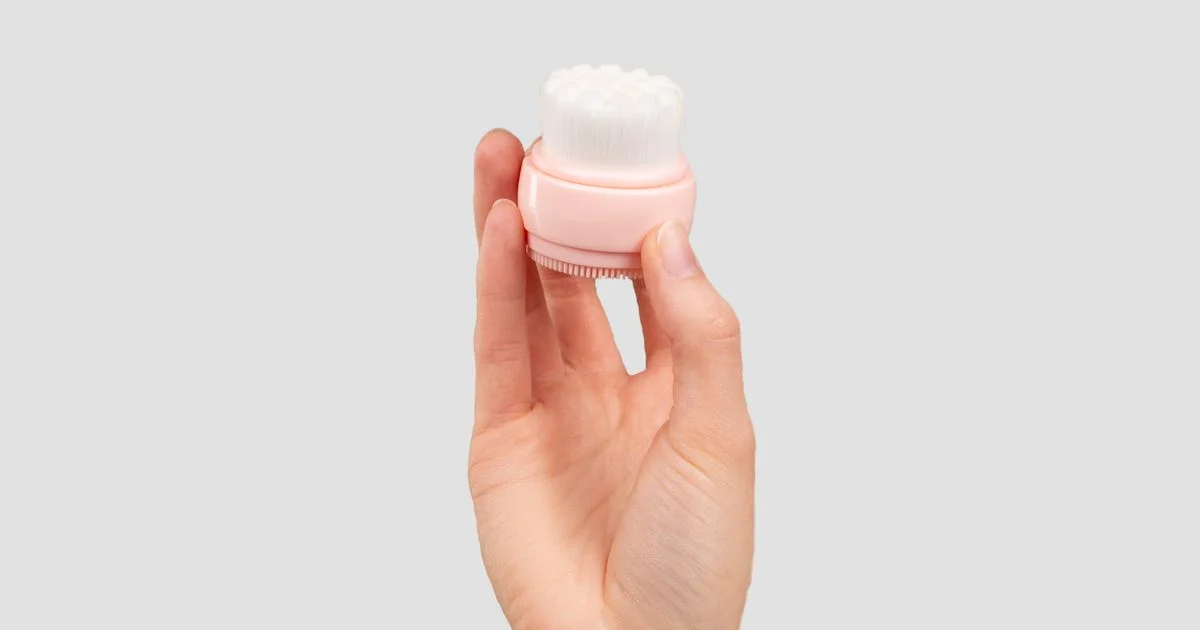
Cleansing devices have been on bathroom shelves long enough that the technology stopped being the expensive part years ago. Shopping for a sonic facial cleansing brush under $60 is really a decision about the head on the end of the handle, because one kind of head is a purchase you repeat three or four times a year and the other is one you may never repeat at all. Everything else on the box is secondary to that.
What one of these actually costs over three years
Three separate lines, and the first one is the only one anyone compares in the store.
The device. A motor, a battery, a seal and a handle. Below sixty dollars you can get all four done competently, and the vibration frequency that the word “sonic” refers to is not meaningfully better on costlier models.
The heads. This is the real bill. Nylon bristle heads are porous by design, which is what lets them exfoliate — and also what lets them trap old oil, dead skin and makeup. The standard advice is to replace a bristle head every three to four months, which is three or four new heads a year, every year, for as long as you own the device. Silicone heads are non-porous; they do not trap the same debris and a silicone head can last for years without losing its shape. On a three-year view, that difference is usually larger than the gap between a cheap device and an expensive one.
Your routine. Rinse after every use, deep clean weekly with a mild cleanser, and dry it completely before it goes back in a cupboard. A device that is not cleaned is a device that puts bacteria back on your face, which is the opposite of the reason you bought it.
Where the cheaper option is genuinely enough
The honest starting point is that a washcloth and a good cleanser do most of this for almost nothing, and dermatologists say so freely. A device earns its place when you wear makeup and sunscreen daily, when your skin is oily or combination and gets congested, or when texture looks dull no matter how carefully you wash by hand.
A low-cost device covers that brief completely when:
- You will use it two or three times a week rather than daily — which is the recommended frequency anyway.
- You are happy with one speed and do not need a pressure sensor telling you to press less hard.
- You want a silicone head, in which case the recurring cost disappears entirely.
- You can rinse and dry it properly, every time, without being reminded by an app.
What the sonic facial cleansing brush price buys at each tier
The sonic facial cleansing brush price ladder mostly sells convenience and reassurance. Here is what genuinely changes as you climb.
| Tier | Head | What genuinely improves | What does not change |
|---|---|---|---|
| Entry | Usually nylon bristle, sometimes dual-sided with silicone | This is the baseline: a motor, one or two speeds, a rinseable body | The cleansing itself; the two-or-three-times-a-week limit |
| Mid-range | Silicone, or a bristle head with a proper seal | Fully sealed body, longer battery, multiple intensities, a head that does not need replacing | How much dirt comes off your face |
| Premium | Silicone, often zoned by facial area | Pressure sensors, app timers, routine tracking | Everything that matters to your skin |
The right-hand column is doing the work in that table. The gap between a competent inexpensive device and an expensive one is measured in features you interact with, not in a cleaner face.

Is sonic facial cleansing brush worth it for your skin?
Working out whether is sonic facial cleansing brush worth it comes out yes has less to do with the device than with the skin you are putting it on. Run through this honestly before you buy.
- Is your skin currently calm? Dermatologists advise against these devices on sensitive or easily irritated skin, on active inflamed acne, on rosacea, eczema or psoriasis, and while recovering from a chemical peel or laser treatment. Moving bristles across inflamed skin can spread bacteria and make breakouts worse.
- Will you keep to two or three times a week? Daily use is where the trouble starts. Repeated over-exfoliation weakens the skin barrier, and the early warning signs are tightness, redness and stinging after use. If those show up, stop and speak to a dermatologist rather than buying a gentler head.
- Which head suits you? Sources genuinely disagree here. One line of advice pairs nylon bristles with oily, combination and acne-prone skin for deeper exfoliation, and silicone with dry or sensitive skin because it cleans without stripping. Another recommends silicone across the board, on the grounds that it is gentler and easier to keep hygienic. Both agree silicone is the lower-maintenance choice; they part company on whether bristles are worth the extra care for congested skin.
If the answer to the first question is no, the cheapest correct purchase is nothing at all, for now.
What to look for in sonic facial cleansing brush deals 2026
Most sonic facial cleansing brush deals 2026 discount the handle and stay quiet about the part you will keep buying. Three things are worth checking before a discount tempts you.
- Whether replacement heads are still sold. A bristle device whose heads have been discontinued is a device with an expiry date, however good the deal.
- Whether the body is genuinely sealed. A device you use with water and cleanser needs to survive being rinsed under a tap, not just splashed.
- Whether a bundle is heads or novelty. A pack that includes a year of replacement heads is real money saved. A pack that includes a travel case and a second handle is not.
Where the money is genuinely wasted
Buying the bristle version without pricing the heads. Three or four heads a year for three years is the biggest number in this purchase, and it is the one nobody adds up at the till.
Paying for app connectivity. The routine is two minutes, two or three times a week. A timer is useful; a phone is not.
Buying a second device for your body. A body brush is a brush. It does not need a motor, a battery or a charging stand.
Replacing a device because results faded. Faded results after a strong first month usually mean the frequency crept up and the skin barrier is protesting. A newer device does not fix that; using the one you own less often often does.
Frequently Asked Questions
The questions that come up once people realize the handle was never the expensive part.
How often should the head be replaced?
Nylon bristle heads are generally replaced every three to four months, because the fibers trap oil and debris and stop being hygienic long before they look worn. Silicone heads are non-porous and can last years, which is why they are the cheaper choice over the life of the device even when the device costs more.
Does it actually clean better than washing by hand?
Used correctly and infrequently, these devices are described as removing oil, dirt, sunscreen and makeup more thoroughly than hands alone. The advantage is real but conditional: it depends entirely on not overusing the device, which is the most common mistake people make with one.
Can I use it every day if I have oily skin?
The advice is no, regardless of skin type. Two to three times a week is the recommended ceiling, and oily skin does not buy you extra sessions. Daily use is the fastest route to a damaged barrier, which shows up as tightness and stinging rather than as more oil.
Is silicone always the better buy?
For running cost and for hygiene, it is the easier answer, and it removes the replacement bill completely. For deeper exfoliation on congested, oily skin, some guidance still favors nylon bristles. If your skin is dry, sensitive or reactive in any way, silicone is the safer place to start.
Bottom line
Price the heads before you price the handle: a silicone device bought once beats a cheaper bristle device plus twelve heads over three years. Keep it to two or three sessions a week, rinse and dry it properly, and stop using it if your skin starts complaining.


1 Comment
Comments are closed.